“ The above traits are inborn and fundamental, belonging to the race everywhere, in Africa as well as America. Strict correctness requires, however, that attention be called to the fact that there are tribal differences among African Negroes that amount almost to the national variations of Europe; and these are reflected in American Negroes, who are the descendants of these different tribes. ”
Afro-descendants
Definition and stakes
The theme of “Afro-descendants” has been addressed by authors such as Lydia Maria Child, William Henry Ruffner, Hubert H. Harrison, Irvine Garland Penn and Stephen Graham. It is often associated with terms like Africa, negro, people, black and African.
Quotes about “Afro-descendants”
Hubert H. Harrison, When Africa awakes (1920)
“ That point concerns the biological breed of persons who should be selected by Negroes as leaders of their race. We risk the offense this time because efficiency in matters of racial leadership, as in other matters, should not be too tender to these points of prejudice when they stand in the way of desirable results. For two centuries in America we, the descendants of the black Negroes of Africa, have been told by white men that we cannot and will not amount to anything except in so far as we first accept the bar sinister of their mixing with us. ”
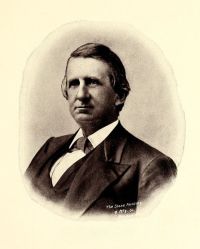 William Henry Ruffner,
Africa's Redemption: a discourse on African colonization in its missionary aspects…
William Henry Ruffner,
Africa's Redemption: a discourse on African colonization in its missionary aspects…
“ Colonization has taken the negro from under his disabilities here, and placed him where he has developed to an intellectual and moral stature never reached before by his race, and now holds him up as the optical demonstration of what the negro may easily become. Whole nebula of phrenological speculations and scientific infidelities have thus been dissipated; and there, star-like, shines out the negro intellect, clear and bright. There, intelligence, freedom, and religion, flourish amongst the descendants of Ham—amidst the much maligned Ethiopian race. ”
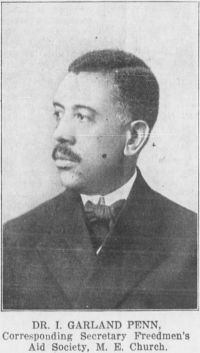 Irvine Garland Penn,
The Afro-American Press and Its Editors
(1891)
Irvine Garland Penn,
The Afro-American Press and Its Editors
(1891)
“ Daniel Webster Davis, Editor Young Men's Friend. When the history of the country and the present achievements of the Afro-American are written, it will be seen that the young men identified with this race have not been inactive. It will be observed that they have performed the part assigned them in the race of life with courage and fidelity. Upon the shoulders of the young Afro-American, man or woman, devolves the solving of the question, commonly called the Negro (Afro-American) Problem. ”
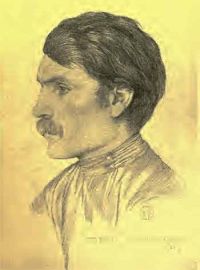 Stephen Graham,
The Soul of John Brown
Stephen Graham,
The Soul of John Brown
“ The new generation of children is being brought up to glorify Negro color. It is told of the princes and warriors from which it is descended, learns with [210] the geography of the United States the geography of Africa, and delights in the cognomen—Afro-American. The color issue will never be settled by all Negroes becoming Whites. It seems clear also that it cannot be solved by all men becoming mulattoes. There seems to remain just one obvious solution, and that is in distinct and parallel development, equality before the law, and mutual understanding and tolerance. ”
Peter Vivian Daniel, Dred Scott v. Sandford — Separate Opinion (1857)
“ Now the following are truths which a knowledge of the history of the world, and particularly of that of our own country, compels us to know — that the African negro race never have been acknowledged as belonging to the family of nations ”
Mary Hazelton Blanchard Wade, Mpuke, Our Little African Cousin
“ We need not go so far away from home, indeed, to see little black children with woolly, kinky hair and flat noses like the little African. In the sunny South of our own land are many negro children as like the little negro cousin in Africa as one pea is like another. Years and years ago slave-ships brought to this country negroes, stolen from their own African homes to be the slaves and servants of the white people here. ”
George Washington Williams, History of the Negro Race in America from 1619 to 1880…
“ It was forgetfulness of God, idolatry! "Righteousness exalteth a nation; but sin is a reproach to any people."The Negro tribes of Africa are as widely separated by mental, moral, physical, and social qualities as the Irish, Huns, Copts, and Druids are. Their location on the Dark Continent, their surroundings, and the amount of light that has come to them from the outside world, are the thermometer of their civilization. It is as manifestly improper to call all Africans Negroes as to call, Americans Indians. ”
 Lydia Maria Child,
An Appeal in Favor of that Class of Americans Called Africans
Lydia Maria Child,
An Appeal in Favor of that Class of Americans Called Africans
“ In order to decide what is our duty concerning the Africans and their descendants, we must first clearly make up our minds whether they are, or are not, human beings—whether they have, or have not, the same capacities for improvement as other men.The intellectual inferiority of the negroes is a common, though most absurd apology, for personal prejudice, and the oppressive inequality of the laws; for this reason, I shall take some pains to prove that the present degraded condition of that unfortunate race is produced by artificial causes, not by the laws of nature. ”
Jr. Thomas Dixon, The Clansman: An Historical Romance of the Ku Klux Klan
“ Since the dawn of history the negro has owned the continent of Africa—rich beyond the dream of poet’s fancy, crunching acres of diamonds beneath his bare black feet. Yet he never picked one up from the dust until a white man showed to him its glittering light. His land swarmed with powerful and docile animals, yet he never dreamed a harness, cart, or sled. A hunter by necessity, he never made an axe, spear, or arrowhead worth preserving beyond the moment of its use. ”
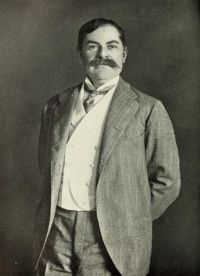 Thomas Nelson Page,
The negro: the southerner's problem
(1904)
Thomas Nelson Page,
The negro: the southerner's problem
(1904)
“ But it is not only in Africa that the Negro has exhibited the absence of the essential qualities of a progressive race. It is everywhere. Since the dawn of history, the Negro has been in one place or another, in Egypt, in Rome, in other European countries, brought in contact with civilization, yet he has failed to receive the vitalizing current under which other races have risen in greater or less degree. ”
Arthur James Johnes, Philological Proofs of the Original Unity and Recent Origin of the Human Race
“ The Negro tribes of Africa have frequently been supposed to belong to an inferior race of Men, an opinion founded—partly on an inadequate conception of the progressive character of the Human species—partly on ignorance of the progress which many Negro nations have actually made. ”
George Washington Williams, History of the Negro Race in America from 1619 to 1880…
“ But in our examination of African tribes we shall not confine ourselves to that class of people known as Negroes, but call attention to other tribes as well. And while, in this country, all persons with a visible admixture of Negro blood in them are considered Negroes, it is technically incorrect. For the real Negro was not the sole subject sold into slavery: very many of the noblest types of mankind in Africa have, through the uncertainties of war, found their way to the horrors of the middle passage, and finally to the rice and cotton fields of the Carolinas and Virginias. ”
 James Anthony Froude,
The English in the West Indies…
James Anthony Froude,
The English in the West Indies…
“ The African blacks have been free enough for thousands, perhaps for tens of thousands of years, and it has been the absence of restraint which has prevented them from becoming civilised. Generation has followed generation, and the children are as like their father as the successive generations of apes. The whites, it is likely enough, succeeded one another with the same similarity for a long series of ages. ”
George Washington Williams, History of the Negro Race in America from 1619 to 1880…
“ The circumstances that led to the founding of the Negro Republic in the wilds of Africa perished in the fires of civil war. The Negro is free everywhere; but the republic of Liberia stands, and should stand until its light shall have penetrated the gloom of Africa, and until the heathen shall gather to the brightness of its shining. May it stand through the ages as a Christian Republic, as a faithful light-house along the dark and trackless sea of African paganism! ”
Stephen Graham,
The Soul of John Brown
“ The American Negroes are the aristocrats of the Negro world. It may be a paradox to assume that a proletariat can become an aristocracy, but an aristocracy is the best a race can produce in culture and manners. No doubt African Negrodom is made up of a great number of races, but all seem to have one common interest and to yield more homage to the name of Africa itself than to any constituent part, kingdom, or state or pasture. The American Negro is beginning to lead Africa as he is leading the Indies. ”
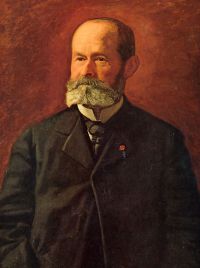 Daniel G. Brinton,
Races and Peoples: Lectures on the Science of Ethnography
Daniel G. Brinton,
Races and Peoples: Lectures on the Science of Ethnography
“ The tendency of the negro race in Africa is that which we observe among negro children in the public schools of the United States. Their powers develop quite as rapidly as those of white children up to a certain point, up to the age of thirteen or fourteen ”
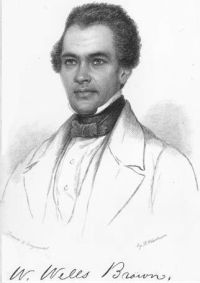 William Wells Brown,
The Black Man
(1863)
William Wells Brown,
The Black Man
(1863)
“ But it does not become the whites to point the finger of scorn at the blacks, when they have so long been degrading them. The negro has not always been considered the inferior race. The time was when he stood at the head of science and literature. Let us see. It is the generally received opinion of the most eminent historians and ethnologists, that the Ethiopians were really negroes, although in them the physical characteristics of the race were exhibited in a less marked manner than in those dwelling on the coast of Guinea, from whence the stock of American slaves has been chiefly derived. ”
Various, The Journal of Negro History, Volume 3…
“ As a matter of fact the Africans are the only contemporaneous primitive people who have anywhere achieved race consciousness and civilization without losing their racial identity. As a consequence almost every fundamental process and stage of civilization, from the most primitive to the most cosmopolitan man, is somewhere represented in the contemporary life of the Negro in Africa and America. ”
Hubert H. Harrison, When Africa awakes (1920)
“ If other men’s experiences have value for the New Negro Manhood Movement it will seek now to profit by them and to bottom the new fervor of faith in itself with the solid support of knowledge. The chains snap from the limbs of the young giant as he rises, stretches himself, and sits up to take notice. But let him, for his future’s sake, insist on taking notice. To drop the figure of speech, we Negroes who have shown our manhood must back it by our mind. This world, at present, is a white man’s world—even in Africa. ”
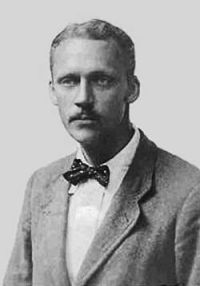 Walter Dalrymple Maitland Bell,
The Wanderings of an Elephant Hunter
(1923)
Walter Dalrymple Maitland Bell,
The Wanderings of an Elephant Hunter
(1923)
“ Terrorise or kill the present generation and educate the next generation, and in course of time you have a race of black Frenchmen. In the fullness of time perfect equality is given her black citizens, as anyone may see at Dakar in West Africa. ”
George Washington Williams, History of the Negro Race in America from 1619 to 1880…
“ Second, A growing desire among the enlightened Negroes in America to learn all that is possible from research concerning the antiquity of the race,—Africa, its inhabitants, and the development of the Negro governments of Sierra Leone and Liberia, led me to furnish something to meet a felt need. If the Negro slave desired his native land before the Rebellion, will not the free, intelligent, and reflective American Negro turn to Africa with its problems of geography [pg vii] and missions, now that he can contribute something towards the improvement of the condition of humanity? ”
Sparkling Gems of Race Knowledge Worth Reading
“ But we all can be Afro-Americans, because we all were of Africa and now are of America. In other words, our forefathers were Africans by birth and became Americans by adoption. We are Africans by descent and Americans both by birth and adoption. This addition, Africans plus Americans, equals Afro-Americans. We conclude, therefore, that the term "Negro," although honorable and significant, is too narrow to be adopted as a national appellation. We need a name that will include every man that came from Africa, regardless of the section or territory from which he came, and that name is "African." ”
George Washington Williams, History of the Negro Race in America from 1619 to 1880…
“ THE vast territory stretching from the Volta River on the west to the Niger in the Gulf of Benin on the east, the Atlantic Ocean on the south, and the Kong Mountains on the north, embraces the three powerful Negro kingdoms of Benin, Dahomey, and Yoruba. From this country, more than from any other part of Africa, were the people sold into American slavery. Two or three hundred years ago there were several very powerful Negro empires in Western Africa. They had social and political government, and were certainly a very orderly people. ”
“ What are the racial endowments of these risen negroes whom we are urged by lofty example to invite into our drawing-rooms upon terms of broadest equality—for upon other terms would be a mockery—as eligible associates, companions, suitors, husbands for our sisters and daughters?—for a sensible father or brother does not admit white men to his home on any other basis. Of what essential racial elements and sources is the negro, risen and unrisen alike? ”
George Washington Williams, History of the Negro Race in America from 1619 to 1880…
“ Nearly all African explorers and travellers have been much amazed at the diversity of color and stature among the tribes they met. This [pg 47] diversity in physical and mental character owes its existence to the diversity and perversity of African climate.The Negro, who is but a fraction of the countless indigenous races of Africa, has been carried down to his low estate by the invincible forces of nature. Along the ancient volcanic tracts are to be found the Libyan race, with a tawny complexion, features quite Caucasian, and long black hair. ”
George Washington Williams, History of the Negro Race in America from 1619 to 1880…
“ And while the great body of the Negro races have been located geographically in Africa, they have been, in no small sense, a cosmopolitan people. Their wanderings may be traced from the rising to the setting sun. ”
George Washington Williams, History of the Negro Race in America from 1619 to 1880…
“ The Negro forms an exceptional race in Africa. He inhabits that immense tract of marshy land which lies between the mountains and the sea, from Senegal to Benguela, and the low lands of the eastern side in the same manner. ”
George Washington Williams, History of the Negro Race in America from 1619 to 1880…
“ Phillis Wheatley has been mentioned already. So, in the midst of darkness and oppression, the Negro race in America, without the use of the Christian church, schoolhouse, or printing-press, produced a poetess, an astronomer, a mathematician, and a physician, who, had they been white, would have received monuments and grateful memorials at the hands of their countrymen. But even their color cannot rob them of the immortality their genius earned. ”
George Washington Williams, History of the Negro Race in America from 1619 to 1880…
“ Pouring over the venerable mountain terraces, an abundant stream from an abundant and unknown source, into the malarial districts, the genuine African has gradually degenerated into the typical Negro. ”
Roswell H. Johnson, Applied Eugenics
“ An elementary knowledge of the history of Africa, or the more recent and much-quoted example of Haiti, is sufficient to prove [Pg 284] that the Negro's own social heritage is at a level far below that of the whites among whom he is living in the United States. No matter how much one may admire some of the Negro's individual traits, one must admit that his development of group traits is primitive, and suggests a mental development which is also primitive. ”
George Washington Williams, History of the Negro Race in America from 1619 to 1880…
“ We may find occasion to observe that an equally decided relation exists between local conditions and the existence of other characters of human races in Africa. Those races who have the Negro character in an exaggerated degree, and who may be said to approach to deformity in person—the ugliest blacks with depressed foreheads, flat noses, crooked legs—are in many instances inhabitants of low countries, often of swampy tracts near the sea-coast, where many of them, as the Papels, have scarcely any other means of subsistence than shell fish, and the accidental gifts of the sea. ”
George Washington Williams, History of the Negro Race in America from 1619 to 1880…
“ So far from being equal to us, the polished inhabitants of Europe, as some ignorant people suppose, they are immeasurably below the Africans themselves,"The typical Negro is the true savage of Africa; and I must paint the deformed anatomy of his mind, as I have already done that of his body."The typical Negroes dwell in petty tribes, where all are equal except the women, who are slaves; where property is common, and where, consequently, there is no property at all; where one may recognize the Utopia of philosophers, and observe the saddest and basest spectacles which humanity can afford. ”
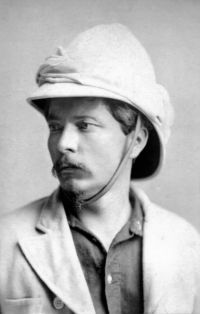 Henry M. Stanley,
How I Found Livingstone
Henry M. Stanley,
How I Found Livingstone
“ To a white stranger about penetrating Africa, it is a most interesting walk through the negro quarters of the Wanyamwezi and the Wasawahili. For here he begins to learn the necessity of admitting that negroes are men, like himself, though of a different colour; that they have passions and prejudices, likes and dislikes, sympathies and antipathies, tastes and feelings, in common with all human nature. The sooner he perceives this fact, and adapts himself accordingly, the easier will be his journey among the several races of the interior. ”


