Summary

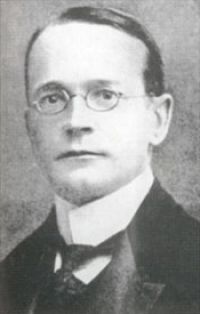
Portrait of Joseph McCabe Joseph McCabe The Story of Evolution — Chapter XVIII. The Evolution of Man

It is now well known that the human body contains a number of vestigial "organs"—organs of no actual use, and only intelligible as vestiges of organs that were once useful. Whatever view we take of the origin of man, each organ in his frame must have a meaning; and, as these organs are vestigial and useless even in the lowest tribes of men, who represent primitive man, they must be vestiges of organs that were of use in a remote pre-human ancestor. The one fact that the ape has the same vestigial organs as man would, on a scientific standard of evidence, prove the common descent of the two.
Source: Wikisource

Portrait of Joseph McCabe Joseph McCabe The Story of Evolution — Chapter XVIII. The Evolution of Man

To put it still more precisely, if we found a whole series of remains of man's ancestors during the Tertiary, we should probably class them, broadly, as femur-remains in the Eocene, monkey-remains in the Oligocene, and ape-remains in the Miocene. In that sense only man "descends from a monkey."
The far more important question is: How did this one particular group of anthropoid animals of the Miocene come to surpass all its cousins, and all the rest of the mammals, in brain-development?
Source: Wikisource

Portrait of Joseph McCabe Joseph McCabe The Story of Evolution — Chapter XVIII. The Evolution of Man

Even if there were no remains of primitive man pointing in the direction of a common ancestry with the ape, no lower types of men in existence with the same tendency, no apes found in nature to-day with a structure so strikingly similar to that of man, and no fossil records telling of the divergence of forms from primitive groups in past time, we should be forced to postulate the evolution of man in order to explain his actual features.
Source: Wikisource

Get perspective with Kwize: daily news enlightened by great literature