Summary

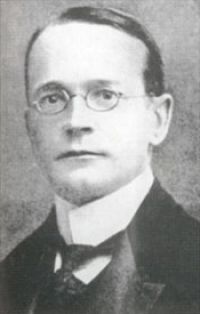
Portrait of Joseph McCabe Joseph McCabe The Story of Evolution — Chapter XVII. The Origin of Our Mammals

From the description of the Tertiary world which we have seen in the last chapter we understand the rapid evolution of the herbivorous Condylarthra. The rich vegetation which spreads over the northern continents, to which they have penetrated, gives them an enormous vitality and fecundity, and they break into groups, as they increase in number, adapted to the different conditions of forest, marsh, or grass-covered plain. Some of them, swelling lazily on the abundant food, and secure for a time in their strength, become the Deinosaurs of their age, mere feeding and breeding machines.
Source: Wikisource

Portrait of Joseph McCabe Joseph McCabe The Story of Evolution — Chapter XVII. The Origin of Our Mammals

It will be seen that evolution not only introduces a lucid order and arrangement into our thousands of species of living and fossil mammals, but throws an admirable light on the higher animal world of our time. The various orders into which the zoologist puts our mammals are seen to be the branches of a living tree, approaching more and more closely to each other in early Tertiary times, in spite of the imperfectness of the geological record.
Source: Wikisource

Portrait of Joseph McCabe Joseph McCabe The Story of Evolution — Chapter XVII. The Origin of Our Mammals

We may conclude that races do not die; they are killed.
The extinction of these races of the early Condylarthra, and the survival of those races whose descendants share the earth with us to-day, are quite intelligible. The hand of natural selection lay heavy on the Tertiary herbivores. Apart from overpopulation, forcing groups to adapt themselves to different regions and diets, and apart from the geological disturbances and climatic changes which occurred in nearly every period, the shadow of the advancing carnivores was upon them.
Source: Wikisource

Get perspective with Kwize: daily news enlightened by great literature