Summary

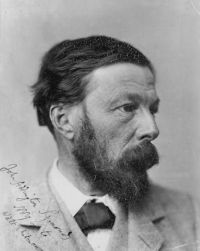
Portrait of John Addington Symonds John Addington Symonds Studies of the Greek Poets (Vol 2 of 2…

For though the Greeks grew up in scenes which we may visit, they gazed on them with Greek eyes, eyes different from ours, and dwelt upon them with Greek minds, minds how unlike our own! Unconsciously, in their long and unsophisticated infancy, the Greeks absorbed and assimilated to their own substance that loveliness which it is left for us only to admire. Between them and ourselves—even face to face with mountain, sky, and sea, unaltered by the lapse of years—flow the rivers of Death and Lethe and New Birth, and the mists of thirty centuries of human life are woven like a veil.
Source: Gutenberg

Portrait of John Addington Symonds John Addington Symonds Studies of the Greek Poets (Vol 2 of 2…

Humanity defined upon the borderland of nature is the life of all Greek sculpture. Even the gods are films of fleshly form emergent on the surface of the elements. The circle of the sun dilates, and Phœbus grows into distinctness with the glory round him; out of the liquid ether gaze the divine eyes of Zeus; Poseidon rises breast-high from the mirrors of the sea. Man, for the first time conscious of his freedom, yet clinging still to the breasts that gave him suck, like a flower rooted to the kindly earth, expresses all his thought and feeling in the language of his own shape.
Source: Gutenberg

Portrait of John Addington Symonds John Addington Symonds Studies of the Greek Poets (Vol 2 of 2…

No one acquainted with Shakespeare and Weber can deny that both have expressed with marvellous subtlety the magic of the sea in its enchanting calm, whereas the Greek poet works only by indirect suggestion, and presents us with a human portrait more than a phantom of the glamour of the deep. What we have lost in definite projection we have gained in truth, variety, and freedom. The language of our art appeals immediately to the emotions, disclosing the spiritual reality of things, and caring less for their form than for the feelings they excite in us.
Source: Gutenberg

Get perspective with Kwize: daily news enlightened by great literature