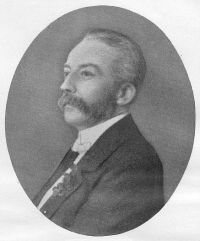
Anne C. E. Allinson

Biographical details

Anne C. E. Allinson Roads from Rome

Are you here to learn to be better Romans, carrying on your own national life, creating at last out of the forces of your own time an architecture and sculpture, a painting and poetry commensurate with your powers? Sometimes I fear you make a cult of Athens, lose yourselves in remembering her as she once was. You seem to spend your lives, as I have sometimes spent wakeful nights at Marathon, my birthplace, listening for the feet of heroes and the neighing of horses on the field where a great battle was once fought.
Source: Gutenberg

Anne C. E. Allinson Greek Lands and Letters (1909)

Now that that value has disappeared with the world it served, we are left to find a new value in the imperishable human thoughts which were inspired by Delphi and have outlived its marbles, its silver and gold, its laurel crowns and echoing lyres. For any subsequent religion has but created, mutatis mutandis, the differing types of men through whom we know the pagan god. If the oracle is dumb, and Apollo but an antique fable, yet men of the twentieth century may still find in the poets and thinkers of Greece expressions of their own faith or their own doubt.
Source: Gutenberg

Anne C. E. Allinson Roads from Rome

I have come to feel, my friends, that the restoration of an art that is not the outcome of a genuine national life is a futile thing. Rome cannot restore the glory of old Athens. She can only learn from Greece how to create a glory of her own. She must so govern her life, so train her sons, that out of their own impulses a new poetry, a new art will grow. Divine influences from the past, yes, they exist. In your own most creative times Cicero and Lucretius, Virgil and Horace, did more than restore. Seeking aliment from Greece, they nurtured their own genius.
Source: Gutenberg

Get perspective with Kwize: daily news enlightened by great literature