Wort

Definition and stakes

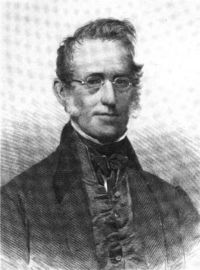
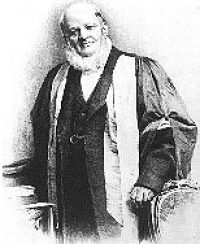
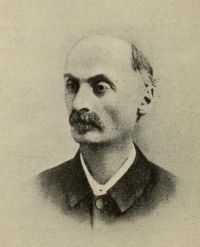
Portrait of Samuel Johnson Samuel Johnson,  The Works of Samuel Johnson, LL.D. in Nine Volumes…

“ I am not yet so lost in lexicography, as to forget that words are the daughters of earth, and that things are the sons of heaven. Language is only the instrument of science, and words are but the signs of ideas: I wish, however, that the instrument might be less apt to decay, and that signs might be permanent, like the things which they denote.
In settling the orthography, I have not wholly neglected the pronunciation, which I have directed, by printing an accent upon the acute or elevated syllable.
”
Source: Gutenberg

James Strong,  Greek in a Nutshell

“ Verbs are classified in conjugation according to the radical letter following the root vowel, or diphthong, in the 1st pers. sing. Pres. Indic. act., lexicon form: in "liquid" verbs (not derivatives in άνω, which is merely strengthened for άω) this is a liquid; in "pure" verbs it is absent, so that the root appears to end in a vowel, etc. Very many verbs seem to be anomalous in some of their forms in consequence of deriving these from an obsolete kindred root. The lexicon gives most of these peculiarities.
§ 63. Liquid verbs almost always strengthen their root in the Pres. and Imperf.
”
Source: Gutenberg

Portrait of Aristotle Aristotle,  The Poetics of Aristotle

“ Language in general includes the following parts:—Letter, Syllable, Connecting word, Noun, Verb, Inflexion or Case, Sentence or Phrase.
A Letter is an indivisible sound, yet not every such sound, but only one which can form part of a group of sounds. For even brutes utter indivisible sounds, none of which I call a letter. The sound I mean may be either a vowel, a semi-vowel, or a mute. A vowel is that which without impact of tongue or lip has an audible sound.
”
Source: Gutenberg

Get perspective with Kwize: daily news enlightened by great literature