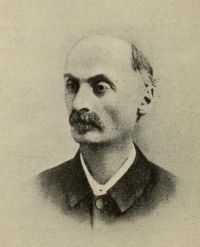
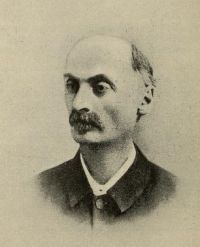
Archibald Henry Sayce

Biographical details

Portrait of Archibald Henry Sayce Archibald Henry Sayce,  The Hittites (1890)

“ Not far from Karabel another monument of Hittite art has been discovered. Hard by the town of Magnesia, on the lofty cliffs of Sipylos, a strange figure has been carved out of the rock. It represents a woman with long locks of hair streaming down her shoulders, and a jewel like a lotus-flower upon the head, who sits on a throne in a deep artificial niche. ”
Source: Wikisource

Portrait of Archibald Henry Sayce Archibald Henry Sayce,  1911 Encyclopædia Britannica (1911)

“ It is obvious, therefore, that grammar constitutes the surest and most important basis for a classification of languages. Words may be borrowed freely by one dialect from another, or, though originally unrelated, may, by the action of phonetic decay, come to assume the same forms, while the limited number of articulate sounds and conceptions out of which language was first developed, and the similarity of the circumstances by which the first speakers were everywhere surrounded, naturally produce a resemblance between the roots of many unconnected tongues. ”
Source: Wikisource

Portrait of Archibald Henry Sayce Archibald Henry Sayce,  The Hittites (1890)

“ The central objects of worship, however, were the golden images of two deities, whom Lucian identifies with the Greek Hera and Zeus, another figure standing between them, on the head of which rested a golden dove. The goddess, who blazed with precious stones, bore in her hand a sceptre and on her head that turreted or mural crown which distinguishes the goddesses of Boghaz Keui. Like them, moreover, she was supported on lions, while her consort was carried by bulls. In him we may recognise the god who at Boghaz Keui is advancing to meet the supreme Hittite goddess. ”
Source: Wikisource

Get perspective with Kwize: daily news enlightened by great literature