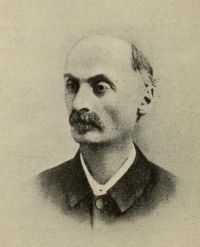
Archibald Henry Sayce

Archibald Henry Sayce

Summary

Portrait of Archibald Henry Sayce Archibald Henry Sayce The Hittites (1890)

Not far from Karabel another monument of Hittite art has been discovered. Hard by the town of Magnesia, on the lofty cliffs of Sipylos, a strange figure has been carved out of the rock. It represents a woman with long locks of hair streaming down her shoulders, and a jewel like a lotus-flower upon the head, who sits on a throne in a deep artificial niche.
Source: Wikisource

Portrait of Archibald Henry Sayce Archibald Henry Sayce The Hittites (1890)

The central objects of worship, however, were the golden images of two deities, whom Lucian identifies with the Greek Hera and Zeus, another figure standing between them, on the head of which rested a golden dove. The goddess, who blazed with precious stones, bore in her hand a sceptre and on her head that turreted or mural crown which distinguishes the goddesses of Boghaz Keui. Like them, moreover, she was supported on lions, while her consort was carried by bulls. In him we may recognise the god who at Boghaz Keui is advancing to meet the supreme Hittite goddess.
Source: Wikisource

Portrait of Archibald Henry Sayce Archibald Henry Sayce The Hittites (1890)

In ancient art the Amazons are represented as clad in the Hittite tunic and brandishing the same double-headed axe that is held in the hands of some of the Hittite deities on the rocks of Boghaz Keui, while the 'spear' lent to them by the Greek poet brings to our recollection the spear held by the warriors of Karabel. We cannot explain the myth of the Amazons except on the supposition that they represented the armed priestesses of the Hittite goddess, and that a tradition of the Hittite empire in Asia Minor has entwined itself around the story of their arrival in the West.
Source: Wikisource

Get perspective with Kwize: daily news enlightened by great literature