Fermentation

Definition and stakes

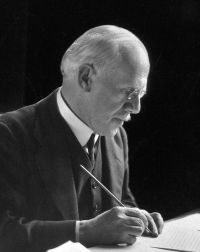
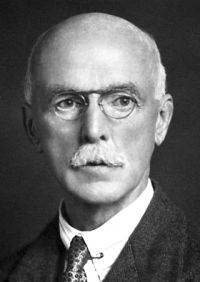
Portrait of Arthur Harden Arthur Harden Alcoholic Fermentation

The phenomenon of fermentation is still for him one which accompanies the decomposition of the constituents of the cell, rather than their building up by vegetative growth. "When the fungus ceases to grow, the bond which holds together the constituents of the cell contents is relaxed, and it is the motion which is thus set up in them which is the means by which the yeast cells are enabled to bring about a displacement or decomposition of the elements of sugar or other organic molecules."
Source: Gutenberg

Various Popular Science Monthly (1901)

More recently the conception of the living cell as the essential feature of the process has been dethroned in its turn, and alcoholic fermentation is now shown to rest on the action of an 'unorganized,' 'lifeless,' or 'soluble' ferment or enzyme, secreted by the yeast plant. Further, the action of this enzyme and of other and more familiar 'unorganized' ferments has been brought into line with some of the most characteristic activities of the living cell, and many general life phenomena have been shown to be in reality phenomena of fermentation.
Source: Wikisource

Portrait of Arthur Harden Arthur Harden Alcoholic Fermentation

Pasteur was therefore led to consider fermentation as a physiological process accompanying the life of the yeast. His conclusions were couched in unmistakable words: "The chemical act of fermentation is essentially a phenomenon correlative with a vital act, commencing and ceasing with the latter. I am of opinion that alcoholic fermentation never occurs without simultaneous organisation, development, multiplication of cells, or the continued life of cells already formed. The results expressed in this memoir seem to me to be completely opposed to the opinions of Liebig and Berzelius.
Source: Gutenberg

Get perspective with Kwize: daily news enlightened by great literature