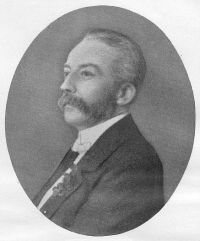
Isocrates

Definition and stakes

Various,  The Atlantic Monthly, Volume 02…

“ For I do not accept that definition of Isocrates, that the office of his art is to make the great small and the small great; but I esteem this to be its perfection,—when the orator sees through all masks to the eternal scale of truth, in such sort that he can hold up before the eyes of men the fact of today steadily to that standard, thereby making the great great and the small small,—which is the true way to astonish and to reform mankind. ”
Source: Gutenberg

Portrait of Richard Claverhouse Jebb Richard Claverhouse Jebb,  Essays and Addresses (1907)

“ Many of the extant pieces of the orator Isocrates, in the fourth century B.C., though couched in the form of speeches, were meant to be read, not spoken, and are in reality highly finished political pamphlets. More, perhaps, than any writer of antiquity, Isocrates resembles a journalist who is deeply impressed with the dignity and responsibility of his calling; who spares no pains to make his work really good; and who has constantly before his mind the feeling that his audience is wider, and his power greater, than if he was actually addressing a public assembly on the same theme. ”
Source: Wikisource

Portrait of Richard Claverhouse Jebb Richard Claverhouse Jebb,  1911 Encyclopædia Britannica (1911)

“ It was a wonderful century which the life of one man had thus all but spanned. Isocrates had reached early manhood when the long struggle of the Peloponnesian War—begun in his childhood—ended with the overthrow of Athens. The middle period of his career was passed under the supremacy of Sparta. His more advanced age saw that brief ascendancy which the genius of Epameinondas secured to Thebes. And he lived to urge on Philip of Macedon a greater enterprise than any which the Hellenic world could offer. ”
Source: Wikisource

Get perspective with Kwize: daily news enlightened by great literature