Summary

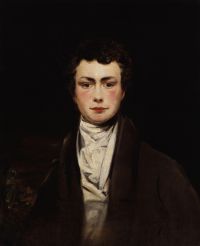
Portrait of Thomas Moore Thomas Moore Life of Lord Byron, Vol. 6

Every scene of life has two sides, a dark and a bright one; and the mind that has an equal mixture of melancholy and vivacity is best of all qualified for the contemplation of either." It would not be difficult to show that to this readiness in reflecting all hues, whether of the shadows or the lights of our variegated existence, Lord Byron owed not only the great range of his influence as a poet, but those powers of fascination which he possessed as a man.
Source: Gutenberg

Portrait of Thomas Moore Thomas Moore Life of Lord Byron, Vol. 6

A variety of powers almost boundless, and a pride no less vast in displaying them,—a susceptibility of new impressions and impulses, even beyond the usual allotment of genius, and an uncontrolled impetuosity, as well from habit as temperament, in yielding to them,—such were the two great and leading sources of all that varied spectacle which his life exhibited; of that succession of victories achieved by his genius, in almost every field of mind that genius ever trod, and of all those sallies of character in every shape and direction that unchecked feeling and dominant self-will could dictate.
Source: Gutenberg

Portrait of Thomas Moore Thomas Moore Life of Lord Byron, Vol. 6

The beautiful but barren Hymettus, the whole coast of Attica, her hills and mountains, Pentelicus, Anchesmus, Philopappus, &c. &c. are in themselves poetical, and would be so if the name of Athens, of Athenians, and her very ruins, were swept from the earth. But am I to be told that the "nature" of Attica would be more poetical without the "art" of the Acropolis? of the Temple of Theseus? and of the still all Greek and glorious monuments of her exquisitely artificial genius? Ask the traveller what strikes him as most poetical, the Parthenon, or the rock on which it stands?
Source: Gutenberg

Get perspective with Kwize: daily news enlightened by great literature