Summary

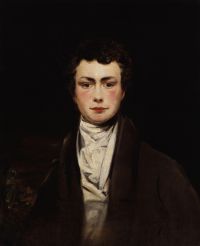
Portrait of Thomas Moore Thomas Moore Life of Lord Byron, Vol. 2

Hobhouse is expected daily in London; we shall be very glad to see him; and, perhaps, you will come up and 'drink deep ere he depart,' if not, 'Mahomet must go to the mountain;'—but Cambridge will bring sad recollections to him, and worse to me, though for very different reasons. I believe the only human being that ever loved me in truth and entirely was of, or belonging to, Cambridge, and, in that, no change can now take place. There is one consolation in death—where he sets his seal, the impression can neither be melted nor broken, but endureth for ever.
Source: Gutenberg

Portrait of Thomas Moore Thomas Moore Life of Lord Byron, Vol. 2

To me he was much, to Hobhouse every thing.—My poor Hobhouse doted on Matthews. For me, I did not love quite so much as I honoured him; I was indeed so sensible of his infinite superiority, that though I did not envy, I stood in awe of it. He, Hobhouse, Davies, and myself, formed a coterie of our own at Cambridge and elsewhere. Davies is a wit and man of the world, and feels as much as such a character can do; but not as Hobhouse has been affected. Davies, who is not a scribbler, has always beaten us all in the war of words, and by his colloquial powers at once delighted and kept us in order.
Source: Gutenberg

Portrait of Thomas Moore Thomas Moore Life of Lord Byron, Vol. 2

There are those who trace in the peculiar character of Lord Byron's genius strong features of relationship to the times in which he lived; who think that the great events which marked the close of the last century, by giving a new impulse to men's minds, by habituating them to the daring and the free, and allowing full vent to "the flash and outbreak of fiery spirits," had led naturally to the production of such a poet as Byron
Source: Gutenberg

Get perspective with Kwize: daily news enlightened by great literature