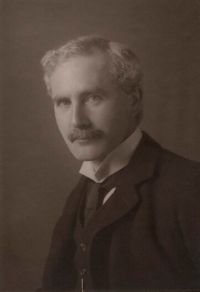
Karl Krumbacher, Richard Claverhouse Jebb and James David Bourchier

Biographical details

Karl Krumbacher, Richard Claverhouse Jebb and James David Bourchier 1911 Encyclopædia Britannica, Volume 12… (1911)

The Greeks were not literary imitators of foreign models; the forms of poetry and prose in which they attained to such unequalled excellence were first developed by themselves. Their literature had its roots in their political and social life; it is the spontaneous expression of that life in youth, maturity and decay; and the order in which its several fruits are produced is not the result of accident or caprice. Further, the old Greek literature has a striking completeness, due to the fact that each great branch of the Hellenic race bore a characteristic part in its development.
Source: Wikisource

Karl Krumbacher, Richard Claverhouse Jebb and James David Bourchier 1911 Encyclopædia Britannica, Volume 12… (1911)

Great as an artist, great too in the largeness of his historical conception, Herodotus fails chiefly by lack of insight into political cause and effect, and by a general silence in regard to the history of political institutions. Both his strength and his weakness are seen most clearly when he is contrasted with that other historian who was strictly his contemporary and who yet seems divided from him by centuries.
Thucydides was only thirteen years younger than Herodotus; but the intellectual space between the men is so great that they seem to belong to different ages.
Source: Wikisource

Karl Krumbacher, Richard Claverhouse Jebb and James David Bourchier 1911 Encyclopædia Britannica, Volume 12… (1911)

Ictinus and Pheidias gave shape in stone, not to mere visions of the studio, but to the more glorious, because more real and vivid, perceptions which had been quickened in them by a living communion with the Athenian spirit, by a daily contemplation of Athenian greatness, in the theatre where tragic poets idealized the legends of the past, in the ecclesia where every citizen had his vote on the policy of the state, or in that free and gracious society, full of beauty, yet exempt from vexatious constraint, which belonged to the age of Pericles.
Source: Wikisource

Get perspective with Kwize: daily news enlightened by great literature