“ I glanced at Rhodes; I thought that even he looked grave and troubled. Well, so I thought, might he be! I said nothing, however, until the angel had rejoined her companions. Then: "There can be not the slightest doubt that they look with great fear upon the coming of people from that world above, a world as mysterious, I suppose, to them, as this subterranean world of theirs is to us. And, now that they know that they have the great secret also when they have you and me—well, Milton, old tillicum, I think it will indeed be strange if either of us ever again casts a shadow in the sun." ”
Rhodes
Definition and stakes
The literary concept of "Rhodes" includes both the historical figure Cecil Rhodes, a controversial British imperialist, and the island of Rhodes, rich in ancient and medieval history. Authors such as Princess Catherine Radziwill and Morley Roberts examine Rhodes’s legacy from contrasting perspectives—one highlighting his unrealized ambitions and inner struggles, the other criticizing his imperialist deeds.
Works like G. A. Henty’s A Knight of the White Cross emphasize the island’s strategic importance, while Cecil Rhodes’s own will reveals his personal connections. These diverse depictions highlight how "Rhodes" represents both human ambition and the burden of historical inheritance.
Quotes about “Rhodes”
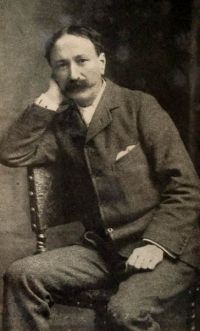 Morley Roberts,
A Tramp's Notebook
Morley Roberts,
A Tramp's Notebook
“ All trouble in this wicked world was due to Rhodes; if Rhodes had not been born, or had had the grace to die very early, South Africa would have been little less than a Paradise. Rhodes was a bad man, whose chief aim was to drag the English flag in the dirt. Rhodes was Apollyon and a financier, and the foul fiend himself. And as the old man worked himself into a spluttering rage, he emphasised every point in his declamation by a furious slap, not on his own knee, but on the knee of the journalist who was interpreting for me. ”
 Charles Egbert Craddock,
In the "stranger people's" country
Charles Egbert Craddock,
In the "stranger people's" country
“ If Rhodes had been entirely at liberty, it is doubtful whether he would have remained. There was something so menacing in the old woman's eye, so coercively albeit vaguely frightful to the imagination, that the idea of spending a few hours alone with her, to eat at her board and sit by her fireside and listen to her talk, with that thin friendly veneer scarcely concealing the harsh vindictiveness of her nature, was not to be contemplated with equanimity. ”