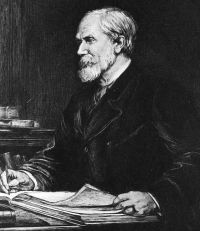
Henry Yule

Henry Yule

Summary

Portrait of Henry Yule Henry Yule,  Hobson-Jobson — K (1903)

“ KILLA-KOTE, s. pl. A combination of Ar.—P. and Hind. words for a fort (ḳil'a for ḳal'a, and kōṭ) , used in Western India to imply the whole fortifications of a territory (R. Drummond) .
KILLUT, KILLAUT, &c., s. Ar.—H. khil'at. A dress of honour presented by a superior on ceremonial occasions; but the meaning is often extended to the whole of a ceremonial present of that nature, of whatever it may consist.
”
Source: Wikisource

Portrait of Henry Yule Henry Yule,  Hobson-Jobson — K (1903)

“ The name Kling, applied to settlers of Indian origin, makes its appearance in the Portuguese narratives immediately after the conquest of Malacca (1511) . At the present day most, if not all of the Klings of Singapore come, not from the "Northern Circars," but from Tanjore, a purely Tamil district. And thus it is that so good an authority as Roorda van Eijsinga translates Kalīng by 'Coromandel people.' They are either Hindūs or Labbais (see LUBBYE) . The latter class in British India never take domestic service with Europeans, whilst they seem to succeed well in that capacity in Singapore. ”
Source: Wikisource

Portrait of Henry Yule Henry Yule,  Hobson-Jobson — K (1903)

“ The coast of Kalinga appears to be that part of the continent whence commerce with the Archipelago at an early date, and emigration thither, was most rife; and the name appears to have been in great measure adopted in the Archipelago as the designation of India in general, or of the whole of the Peninsular part of it. Throughout the book of Malay historical legends called the Sijara Malayu the word Kaling or Kling is used for India in general, but more particularly for the southern parts (see Journ. Ind. Archip. v. 133) . ”
Source: Wikisource

Get perspective with Kwize: daily news enlightened by great literature