“ They could tell tales worth inditing, those pillars and galleries that have witnessed all the major festivities of Punjab Anglo-India—its loves and jealousies and high-hearted courage—from the day of crinolines and whiskers, to this day of the tooth-brush moustache, the retiring skirts and still more retiring bodices of after-war economy. And there are those who believe they will witness the revelry of Anglo-Indian generations yet to be. ”
Punjab
Definition and stakes
Punjab, a province of Pakistan, is the nation’s most populous and economically crucial region, renowned for its fertile plains, historical depth, and cultural wealth. Home to Lahore, its vibrant capital, and major cities like Faisalabad and Multan, Punjab’s identity is shaped by its five rivers—the Indus and its tributaries—and a legacy spanning ancient civilizations, Mughal splendor, and colonial influence.
Authors such as Lala Lajpat Rai highlighted its socio-political struggles, while Sir Richard Carnac Temple emphasized its geographical and human resilience. Maud Diver evoked its Anglo-Indian history, and John James Hood Gordon celebrated its entrepreneurial spirit. These varied perspectives underscore Punjab’s enduring role as a crossroads of tradition, conflict, and prosperity, reflecting its complex interplay of heritage and modernity.
Quotes about “Punjab”
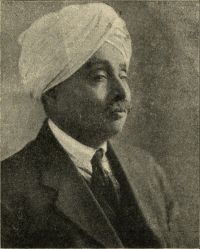
Lala Lajpat Rai,
The Political Future of India
“ Yet, if we compare the civil status of the people of the Punjab with that of other provinces, we will find that they have been persistently denied equality of status with Bengal, Bombay and Madras. The Punjab peasantry, which supplies the largest number of soldiers to the army, is the most illiterate and ignorant of all the classes of Indian population. ”
Earl Frederick Sleigh Roberts Roberts, Forty-one years in India: from subaltern to commander-in-chief
“ Your Excellency's separation is the harder to bear for the men of the Punjab because it is our Punjab that is proud of the fact that about forty years ago the foundation stone of all your famous and noble achievements, which not only India, but England, rightly boasts of, was laid down in one of its frontier cities, and that the greater part of your indomitable energies was spent in the Punjab frontier defence. ”
John James Hood Gordon, The Sikhs (1904)
“ Though the Punjab is not blessed by nature like the rich tropical Gangetic valley, it is fruitful in bold and enterprising men. This is the secret of its great prosperity at the present day. Nowhere in India are the peasantry more flourishing and contented, as it was Lord Lawrence's policy fifty years ago to make them—to become the bulwark of the Indian Empire in the north. ”
Frederick P. Gibbon, The Disputed V.C.: A Tale of the Indian Mutiny
“ Right across the vast Punjab swept the famous corps of Guides, through shady groves of peach and apricot trees, and over dusty plains destitute of shelter; across the five rivers to which the land owes its name, [1] each day bringing the stalwart frontiersmen nearer to the goal of their desire. Every man in that band was eager for the fray. [1] Punjab means “the country of the five rivers”.Afridis, Afghans, and the various Pathan tribesmen of the [Pg 146] corps looked forward to the sacking of the wealthy city. ”
George Rawlinson,
The Seven Great Monarchies Of The Ancient Eastern World…
“ The Punjab, which contains an area of above fifty thousand square miles, is mountainous towards the north, where it adjoins on Kashmeer and Thibet, but soon sinks down into a vast plain, with a soil which is chiefly either sand or clay, immensely productive under irrigation, but tending to become jungle or desert if left without human care. Sinde, or the Indus valley below the Punjab, is a region of even greater fertility. ”
Oliver Optic,
Across India; Or, Live Boys in the Far East
“ Though Lord Tremlyn and Sir Modava, with their friends, were invited to the residence of the lieutenant-governor, the party went to the Victoria Hotel, for the viscount thought it would be an imposition to quarter them on the chief authority, being eighteen in number. "We are now in the Punjab, the north-western corner of India," said the Hindu gentleman, when they were seated in the parlor of the hotel. "It is watered by the Indus and five of its branches, on one of which, the Ravi, Lahore is situated. Punjab means five rivers. ”
Sir Richard Carnac Temple, Lord Lawrence
“ The name Punjab, a Persian word denoting five-waters, refers to this river-system. The total area of all kinds amounted to one hundred and thirty-five thousand square miles, and the population to just twenty millions; both area and population being exclusive of the Cashmere kingdom. The climate is much the same as that of the Delhi territory already described, except that the winter is sharper and longer while the autumn is more feverish. The people, consisting chiefly of Moslems and Sikhs, was quite the strongest, manliest and sturdiest that the British had ever had to deal with in India. ”
“ The last native rulers of the Punjab were the finest ones of all—the Sikhs. The Sikhs, a nation of fanatics and heroes, fought the Moslems for hundreds of years, and the prize was the rule of the Punjab. The Sikhs won, and formed a barrier behind which India was safe from the savage Moslem tribes of the north-west.The Sikhs are a warrior race pure and simple. They make splendid soldiers under white officers, and the fine Sikh regiments are the pride of our native Indian army. They did not yield up the Punjab to British rule without a stern struggle. ”
Augustus Henry Irby, The Diary of a Hunter from the Punjab to the Karakorum Mountains
“ There is a faquir's establishment on the top, and the view on either side is very fine. That looking down over the plain past Rijaori and Nowshera—over the several wave-like lines of inferior hills into the plains of the Punjab of limitless extent, lost only in vapour and distance—is grand from its great extent, and beautiful in its varied features as in its colouring.The other side presents the masses of the Pir Panjal, covered with snow. This range is of bold massive proportions, and affords the traveller a truly sublime picture of mountain scenery. ”
Sir Alexander Burnes, Travels into Bokhara (Volume 3 of 3…
“ Lower down the Indus, he farms the province of Dera Ghazee Khan to the Khan of Bhawulpoor.Military resources.The military resources of the Punjab are great: it yields more grain than is sufficient for the consumption of its inhabitants; but the scarcity of population prevents the full measure of its [299] production. Camels, mules, horses, and cattle abound, and all of them, except the cattle, which are small, are of a superior description. ”
John James Hood Gordon, The Sikhs (1904)
“ The military revolt of 1857, one of almost unequalled magnitude, was a gigantic effort to throw off our supremacy, which in the interests of civilisation it was our duty to maintain, and it needed the great struggle to bring home to all India the full significance of our mission there. The magnificent behaviour of the Punjab at that time, which so materially aided our cause, was a reflection of the generous treatment accorded to brave enemies and of their belief in our prestige, their loyalty being a matter of conviction and of genuine feeling. ”
Sir Richard Carnac Temple, Lord Lawrence
“ Again, there was something in the strategic position, the historic repute, and in the internal circumstances of the Punjab, to attract the idiosyncrasy of the Anglo-Indian Services; therefore able and aspiring men were willing to volunteer for service there, even with all its risks and hardships. Among the internal circumstances was the national character of the inhabitants, who were known to be sturdier and straighter than those of other provinces, and were expected to present more fully a tabula rasa, for the proceedings of British rule. ”
1911 Encyclopædia Britannica, Volume 16… (1911)
“ For the first time in its history since the earliest Aryan settlers had been overwhelmed by successive waves of invaders, the soil of the Punjab came to have a marketable value, which every year of British rule has increased. A stalwart police was organized; roads were cut through every district, and canals were constructed. Commerce followed on increasing cultivation and communications, courts brought justice to every man’s door, and crime hid its head. ”
1911 Encyclopædia Britannica (1911)
“ The Punjab may be divided into four great natural divisions: the Himalayan tract, the submontane tract, the eastern and Natural Divisions. western plains and the Salt range tract, which have characteristics widely different from each other. The Himalayan tract, which includes the Punjab hill states, consists of 20,000 sq. m. of sparsely inhabited mountain, with tiny hamlets perched on the hill-sides or nestling in the valleys. The people consist chiefly of Rajputs, Kanets, Ghiraths, Brahmans and Dagis or menials. ”
Earl Frederick Sleigh Roberts Roberts, Forty-one years in India: from subaltern to commander-in-chief
“ The Punjab is the sword of India, and Your Excellency has had the courage to lean most strongly upon that sword. It is here that the pulse of the army beats in India; it is hence that the enemies of our country shall feel the downright blow ”
Sir Richard Carnac Temple, Lord Lawrence
“ They know how largely you contributed to the raising and forming of the new Punjabi force, which, during the recent troubles, did so much to preserve the peace within the Punjab itself, and which has rendered such gallant service in most parts of the Bengal Presidency. All those among us who are military officers, know how, when the Punjab was imperilled and agitated by the disturbances in Hindostan, you, preserving a unison of accord with the military authorities, maintained internal tranquillity, and held your own with our allies and subjects, both within and without the border ”
John James Hood Gordon, The Sikhs (1904)
“ All the inhabitants of the Punjab, sardars and people, were called upon to submit themselves peacefully to the authority of the British Government. "Over those who shall live as obedient and peaceful subjects the British Government will rule with mildness and beneficence, but if resistance to constituted authority shall again be attempted, if violence and turbulence are renewed, the Governor-General warns the people of the Punjab that the time for leniency will then have passed away, and that their offences will be punished with prompt and most vigorous severity." ”
John James Hood Gordon, The Sikhs (1904)
“ Though nominally a minority—a powerful one—among the mass of the population in the Punjab, which in fact is more Mahomedan than Hindu, they are socially and politically of the highest importance, as they constituted the dominant class at the time of the annexation, and still form the great majority of the gentry in the regions of the five rivers. Their military aristocracy supply the Indian army with excellent officers. ”
William Butler, The Land of the Veda — Chapter V.
“ The road to the Punjab through Kurnal was most providentially kept open. The Punjab was the only source from which a man, or a barrel of flour, or a case of medicine, could reach the English army before Delhi. Had that road been closed upon them, their condition must soon have become desperate. But the circumstances that retained that key of their position in friendly hands was as providential as the good will of the Rampore Nawab toward us at Nynee Tal. Mr. Le Bas, the Judge of Delhi, owed his life on the day of the slaughter to the speed of his horse. ”
1911 Encyclopædia Britannica (1911)
“ In 1858 the Delhi territory, as it was called, west of the Jumna, was transferred from the North-Western Provinces to the Punjab. The enlarged province was raised in rank, and on the 1st of January 1859 the chief commissioner became lieutenant-governor. In 1901 the frontier districts beyond the Indus were severed from the Punjab and made into a separate province called the North-West Frontier province. ”
Sir Alexander Burnes, Travels Into Bokhara (Volume 2 of 3…
“ There is, perhaps, no inland country of the globe which possesses greater facilities for commerce than the Punjab, and there are few more rich in the productions of the mineral, vegetable, and animal kingdoms. Intersected by five navigable streams, it is bounded on the west by one of the largest rivers of the Old World. To the north it has the fertile and fruitful vale of Cashmere to limit its sceptre; so placed, that it can export without trouble its costly fabrics to the neighbouring kingdoms of Persia and Tartary, China and India. ”
Sir Thomas Hungerford Holdich, The Gates of India: Being an Historical Narrative
“ The clustering villages are thick in some parts—so thick that they jostle each other continuously. There is nothing 102 of the drab Punjab about these villages. They are white-walled and outwardly clean, and in at least one ancient garden there is a fair imitation of a Kashmir pavilion set at the end of a white eye-blinding pathway, leading straight and stiff between rows of cypress, and blotched in spring with inky splashes of fallen mulberries. ”
Mohandas K. Gandhi, Freedom's Battle (1922)
“ Every Indian feels the insult to the Punjab as a personal wrong, every Mussalman resents the wrong done to the Khilafat. There is therefore a favourable atmosphere for expecting cohesive and restrained movement on the part of the masses. ”
Sir Richard Carnac Temple, Lord Lawrence
“ By reason of his conduct in the Punjab at this crisis, he has been hailed as the deliverer and the preserver of India. In an account of his life it is necessary at the very least to recapitulate, just thirty years after the event, the several acts, measures or proceedings of his which gave him a claim to this eminent title. All men probably know that he brought about a result of the utmost value to his country. ”
Mohandas Karamchand Gandhi, The Wheel of Fortune (1922)
“ Only the leaders need to have faith in their women and themselves. When Saraladevi wrote to me that she might want goods from Bombay, I felt hurt. The Punjab has all the time and all the labour and the material necessary for producing her own cloth. She has brave merchants. She has more than enough capital. She has brains. Has she the will? She can organise her own Swadeshi in less than a year, if the leaders will work at this great cause. It is playing with Swadeshi for the Punjab to have to import cloth from Bombay. ”
Sir Richard Carnac Temple, Lord Lawrence
“ Early in 1857 all people in the Punjab, with John the Chief Commissioner at their head, rejoiced to hear that Henry Lawrence had been appointed by Lord Canning to be Chief Commissioner of Oude and would now occupy a position peculiarly suited to his genius.The narrative, having now reached the month of April, 1857, may pause for a moment on the eve of a perilous crisis. In the coming events the Punjab was destined to play a foremost part, to be the staff for sustaining the empire and the sword for destroying its enemies. ”
Sir Alexander Burnes, Travels Into Bokhara (Volume 2 of 3…
“ We can readily discover the capabilities of the Punjab, not only to support its own army, but that of another country; and an enemy, whether native or European, if defeated in the plains, might defy, in the valley of Cashmere, every attempt at subjection, since it could subsist without foreign aid, in a natural fortress, abounding in resource, that might be rendered impregnable. ”
Sir Richard Carnac Temple, Lord Lawrence
“ The Sepoys having mutinied or been disarmed throughout the Punjab, it became instantly necessary to supply their place if possible by trustworthy Native troops; to this task he applied himself with the utmost skill and energy. He caused the flower of the Punjab{105} Frontier force, already mentioned in a preceding chapter, to be despatched with extraordinary expedition to Delhi. He raised fresh levies, with very suggestive aid from Edwardes at Peshawur, by selecting men from among the Sikhs and Moslems of the Punjab. ”
Bhagat Singh,
The Problem of Punjab’s Language and Script
(1923)
“ Many great men born in Punjab, who are comparable to Shri Devendra Thakur and Keshav Chandra Sen of Bengal, but we did not respect them and easily forgot them after their deaths—for example, guru Gyan Singhji, etc. ”
John James Hood Gordon, The Sikhs (1904)
“ Again they fought with all their vigorous might, but being completely vanquished in the open field, they then, like brave men as they are, submitted to the decree of war, and in 1849 were absorbed with the Punjab into the British Indian Empire. ”
Louise Jordan Miln,
When We Were Strolling Players in the East
“ Hopes are impotent things often; but I hope that some day I may go back to the East. I wish that I could have written more adequately of the Orient—I wish it very much.There are many places to which my heart goes back eagerly, but of which I have not found time to write a sentence.We passed some dreadful but delightful months in the cantonments of the Punjab, when the Punjab was hottest.Murree was to me the most delightful spot in India. It is a hill place—a resting spot and a breathing station for soldiers who are worn out, or blessed with indulgent Colonels. ”
1911 Encyclopædia Britannica (1911)
“ The Bengal native army was their tool, which circumstances put into their hands at the psychological moment when British power seemed to be at its lowest point. But the fighting races of the Punjab saw no reason for casting in their lot with the mutineers, and the great majority of the independent princes who had nothing of which to complain, like Patiala in the Punjab, Holkar and Sindhia in central India, preserved a loyal or at least an interested friendship. ”