“ JUMNA, n.p. The name of a famous river in India which runs by Delhi and Agra. Skt. Yamunā, Hind. Jamunā and Jamnā, the Διαμούνα of Ptolemy, the Ἰωβαρής of Arrian, the Jomanes of Pliny. The spelling of Ptolemy almost exactly expresses the modern Hind. form Jamunā. The name Jamunā is also applied to what was in the 18th century, an unimportant branch of the Brahmaputra R. which connected it with the Ganges, but which has now for many years been the main channel of the former great river. ”
Quotes about “Jamuna”
The Book of the Thousand Nights and a Night… (1885)
“ The first to open the gate of battle was Jamrkan, who drave his charger into mid-plain and played with sword and javelin, till the understanding was amazed; after which he cried out, saying, “Ho! who is for tilting? Ho! who is for fighting? Let no sluggard come out to me to-day nor weakling! I am the slayer of Kurajan bin Jaland; who will come forth to avenge him?” When Jaland heard the name of his son, he cried out to his men, “O whore-sons, bring me yonder horseman who slew my son, that I may eat his flesh and drink his blood.” ”
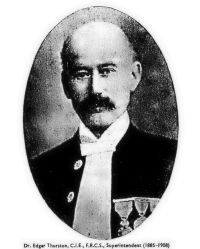 Edgar Thurston,
Castes and Tribes of Southern India
(1909)
Edgar Thurston,
Castes and Tribes of Southern India
(1909)
“ They never try to deceive the Janmi. He is asked to settle their disputes, but these are rare. They never go to law. The Janmi can call on them for labour, and they give it willingly. If badly treated, as they have been at times by encroaching plainsmen, they run off to another forest, and serve another Janmi. At the Onam festival they come with gifts for the Janmi, who stands them a feast. The relation between the jungle folk and the Janmi shows the instinct in a primitive people to have a lord. There seems to be no gain in having a Janmi. ”
 Raden Adjeng Kartini,
Letters of a Javanese Princess
Raden Adjeng Kartini,
Letters of a Javanese Princess
“ And it was the misery that I saw, even in my childish years, that first awakened in me the desire to fight against these time-honoured customs, and substitute justice for old tradition.Our work will have a two-fold aim, first to help to enlighten all our people, and secondly to raise up our sisters, so that they may live and be treated as human beings. To all of you who have sympathy for Java, and the Javanese, we send an urgent prayer—help us to realize our ideals; they mean so much to our people and to our sex. ”
Raden Adjeng Kartini,
Letters of a Javanese princess…
(1921)
“ He is devoted to his little wife, has a cheerful, energetic disposition and a sympathetic heart. He maintains a whole multitude of poor families; that is pleasant, do you not think so? But many Javanese do that; they have much consideration for their poor neighbours. There is hardly a single native chief who has not one or more poor families living in his house, or on his support outside. It is not for nothing that India is noted for its hospitality. Are you not satisfied now about sister too? ”
Bertram Mitford, The Induna's Wife
“ By the time I reached my kraal, night had fallen. Entering my large hut, I called for Jambúla the slave who had been with me in the slaying of the ghost-bull. By birth Jambúla was of the Amaxosa, a numerous and warlike people whose land is to the southward, as you know, Nkose. When a young man his family had been “eaten up” by order of its chief; and he, narrowly escaping with is life, had at last found refuge with a tribe of Basuti, among whom we had captured him. And now I knew that if there was one man upon whose fidelity I could entirely reckon, that man was Jambúla. ”
Raden Adjeng Kartini,
Letters of a Javanese Princess
“ We Javanese cannot live without flowers and sweet odours. The native flowers in their splendour awaken in me a world of thought and feeling whenever I breathe in their perfume. Days afterwards it lives in my memory, and I feel the strong Javanese blood coursing through my veins. Oh soul of my people, that used to be too beautiful, that was full of kindness, poetry, gentleness and modesty—what has become of you? What have time and slothfulness not made of you? ”
 Eliza Ruhamah Scidmore,
Java
(1897)
Eliza Ruhamah Scidmore,
Java
(1897)
“ They do not fear the European as they did formerly. The time is gone when the entire population of a village could be driven to a far-off plantation with a stick; the pruning-knife and the ax would quickly be turned against the driver in our times. The Javanese to-day does not believe that you are interested in his welfare only; he is well aware that he is cheated out of a large proportion of the value of the coffee that is harvested. Some people may think it a pity that the time of coercion is coming to an end in Java, but that cannot change the facts. ”
Raden Adjeng Kartini,
Letters of a Javanese princess…
(1921)
“ Stella, I wish that you could read it. You must know that many of the native rulers rejoice at the action of the Government. The Javanese nobles are in favour with the Government here and in the Motherland, and everything possible is done to help them, and to make them blossom to perfection. The aristocracy sees with sad eyes how sons of the people are educated, and often even elevated to their ranks by the government because of knowledge, ability and industry. Sons of the people go to European schools and compare favourably in every respect, with the high and honourable sons of the noble. ”
Raden Adjeng Kartini,
Letters of a Javanese Princess
“ And she to whom no ditch was too broad to be leapt, no tree too high to be climbed, who loved nothing so much as to run like a wild colt in the meadows, must now be calm, composed and grave, as beseemed a Javanese young lady of a high and noble house. The ideal Javanese girl is silent and expressionless as a wooden doll, speaking only when it is necessary, and then with a little whispering voice which can hardly be heard by an ant; she must walk foot before foot and slowly like a snail, laugh silently without opening her lips; it is unseemly for the teeth to show, that is to be like a clown. ”
CIOS, Life in Afrikanderland as viewed by an Afrikander
“ The Reform Committee had promised Jameson (so he declared) to send two thousand men to aid him in pushing his way through to Johannesburg. But what did these brave reformers do—these followers of Mirabeau, Rousseau, and who knows, perhaps, Marat? When Jameson was on his way, as per agreement with them, to fight with them, and for them, these reformers (?) sent a deputation to Pretoria and concluded an armistice with the Government, by which they bound themselves not to do anything to break the peace, or to give the Government cause to send a force against them for a stipulated time. ”
Various, The Great Round World and What Is Going On In It…
“ Jameson from the leading Uitlanders in Johannesburg that the Boers were up in arms, and that the people of Johannesburg were in danger of their lives.They begged Dr. Jameson to come to their aid, in the name of humanity.Dr. Jameson did not send this appeal on to his superiors, and wait for orders, as he should have done, but thinking that he was doing a glorious deed, he gathered a little force of eight hundred men together, and cutting down the telegraph wires behind him, so that no orders could reach him and stop him, he dashed into the Transvaal to the relief of Johannesburg. ”
 Lydia Maria Child,
Autumnal leaves: tales and sketches in prose and rhyme
(1856)
Lydia Maria Child,
Autumnal leaves: tales and sketches in prose and rhyme
(1856)
“ The population of Java is an assemblage of various nations; and as he listened intently to whatever he heard hummed, whistled, or played, in the parlour or in the slave-quarters, he knew snatches of a great variety of tunes when he was six years old. It was his pleasure to twine Hindoo, Arab, Javanese, English, and Dutch melodies into improvised fantasias, which resembled grotesque drawings, representing birds and monkeys, flowers, fruit, and human faces, bound together in a graceful tangle of vines. ”
Raden Adjeng Kartini,
Letters of a Javanese Princess
“ My friends here say that we shall act wisely if we do nothing but sleep for a hundred years. When we awakened, Java would be more as we would have her."Work among the people of India" I know. Mevrouw Zuylen-Tromp sent Father the book, hoping to arouse his interest. But he would rather interest himself in a book about the native woman; I had thought of that myself. I have much to tell about Javanese women, but I am still too young, and have had so little, so pitifully little, experience with life. The cause for which I would speak is to me too earnest and too sacred to be approached lightly. ”
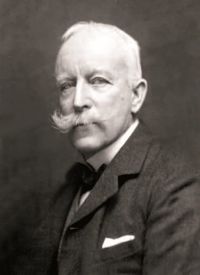 Thomas Hungerford Holdich,
1911 Encyclopædia Britannica, Volume 11…
(1911)
Thomas Hungerford Holdich,
1911 Encyclopædia Britannica, Volume 11…
(1911)
“ At Allahabad, however, it receives the Jumna, a mighty sister stream, which takes its rise also in the Himalayas to the west of the sources of the Ganges. The combined river winds eastwards by south-east through the United Provinces, receiving the Gumti and the Gogra. The point of junction with both the Gumti and the Gogra has more or less pretension to sanctity. But the tongue of land at Allahabad, where the Jumna and the Ganges join, is the true Prayag, the place of pilgrimage, to which hundreds of thousands of devout Hindus repair to wash away their sins in the sacred river. ”
A Plain and Literal Translation of the Arabian Nights Entertainments…
“ Then came forward Jamrkan and his tribe and kissed the ground before Gharib, who bestowed on him a splendid robe of honour and made him captain of his vanguard, saying, “O Jamrkan, mount with the Chiefs of thy kith and kin and twenty thousand horse and fare on before us to the land of Jaland bin Karkar.” “Hearkening and obedience,” answered Jamrkan and, leaving the women and children of the tribe in Cufa, he set forward. Then Gharib passed in review the Harim of Mardas and his eye lit upon Mahdiyah, who was among the women, wherewith he fell down fainting. ”
CIOS, Life in Afrikanderland as viewed by an Afrikander
“ Jameson is coming! and will soon be here; out and meet him!’ The balconies were covered with spectators; the streets were crowded with enthusiastic men and women, all to welcome their hero. ‘He is coming. Did not our self-elected leaders declare that he had forced his way through the Boers against tremendous odds, and that he would soon be here? Nay, have not our own brave pound-a-day troops gone out to meet him and bring him in in triumph. Ladies, hold your bouquets ready to cast before his feet as he passes; men, keep your throats clear to cheer.’‘Ah, here he comes! ”
Sir Thomas Stamford Raffles, The History of Java, v. 1-2
“ The ideas of the Javans concerning tenures, thus appear to be of three kinds: in the Súnda division they consist in allotting to the villages of uncultivated, and to individual persons of certain portions in the cultivated or sáwah fields: in Chéribon, the sultans and chiefs, as well as the common people, assert pretensions to similar allotments: in the eastern districts, on the contrary, nobody pretends to the possession of land; every one is satisfied with the regulation laid down, but if a man's share is withheld, he is apt to emigrate. ”
CIOS, Life in Afrikanderland as viewed by an Afrikander
“ Drilling and enlisting went on openly in the streets of Johannesburg, and the Government, who still hoped for better counsels to prevail, and was anxious to avoid needless bloodshed, instructed the officials to withdraw the police altogether, to avoid a collision with the newly-enlisted soldiers.The public of Johannesburg, who were indifferent and apathetic before, on the news of Jameson’s advance became enthusiastic. Here was a hero; and who does not delight in worshipping a hero? Those who were neutral and indifferent before, were neutral no longer. ”
CIOS, Life in Afrikanderland as viewed by an Afrikander
“ No, it is our men leading; he is sure to be behind them. But see how their horses sweat; they must have ridden hard. Where is Jameson? Where is Jameson? Alas! their hero was but clay. They had failed him. He had tried not to fail them, but fate was stronger; justice and right were against him; while they were waiting to give him a glorious and triumphal welcome, he was a prisoner. On inquiry, it was found that the brave (?) Johannesburg troops, who had gone forth to aid Jameson, had seen a few Burghers in the distance, and thinking prudence the better part of valour, had retired. ”
Raden Adjeng Kartini,
Letters of a Javanese princess…
(1921)
“ So much that seems to us today to be absolutely impossible, appears tomorrow as an accomplished fact. The Javanese are a nation filled with memories and fairy tales, in dreams and fairy tales the most wonderful things happen, and my heart which is Javanese through and through, holds fast to the illusion that there can still be miracles, even as there were in the far distant past. ”
Raden Adjeng Kartini,
Letters of a Javanese princess…
(1921)
“ The Javanese people are just like other children of nature: they are children of the sun, worshippers of splendour and brilliancy. Very well, gratify that wish, give them what their hearts desire, but at the same time give them something that is true, that is of real worth. ”
Sir Thomas Stamford Raffles, The History of Java, v. 1-2
“ An European or a native, therefore, who has been accustomed to the polite and elegant manners of the Javans, or with the general courtesy of the Malayus, is struck with the unceremonious, rude, and uncivilized habits of the people of Báli.In the arts they are considerably behind the Javans, though they seem capable of advancing rapidly. They are happily not subjected to a frame of government so calculated to repress their energies, or to waste their resources. They are now a rising people. ”
Sir Thomas Stamford Raffles, The History of Java, v. 1-2
“ In the peasantry we observe all that is simple, natural, and ingenuous: in the higher orders we sometimes discover violence, deceit, and gross sensuality.Where not corrupted by indulgence on the one hand, or stupified by oppression on the other, the Javans appear to be [Vol I Pg 277] a generous and warm-hearted people. In their domestic relations they are kind, affectionate, gentle, and contented; in their public, they are obedient, honest, and faithful. In their intercourse with society, they display, in a high degree, the virtues of honesty, plain dealing, and candour. ”
R. V. Russell, The Tribes and Castes of the Central Provinces of India…
“ On the cheeks and temples they make rosette-like marks by bunching up the five fingers, dipping them in a solution of sandalwood and then applying them to the face.1 They regard the Jumna as a sacred river and its water as holy, no doubt because Mathura is on its banks, but pay no reverence to the Ganges. Their priests observe celibacy, but do not practise asceticism, and all the Dhāmis are strict vegetarians. ”
Sir Thomas Stamford Raffles, The History of Java, v. 1-2
“ But what is to be expected from a country, where the natives are so treated, so oppressed? To-day the Javan is ordered to plant his garden with coffee trees: he does so, and although well aware how little he will get for the fruit, he sees them grow up with pleasure, considering their produce as a tribute which he must pay to his master for enjoyment of protection; but now, when they are about to bear fruit, he is ordered to root them out: he does so, and four months afterwards he is again ordered to plant others! Can a more infamous tyranny be imagined? ”
Sir Thomas Stamford Raffles, The History of Java, v. 1-2
“ There is, perhaps, with the exception of the environs of Batavia and Bantam, no part of the island of Java which has so severely felt the bad effects of mismanagement as the district of Chéribon. These effects are visible in the character of the people, who, even among the Javans, are remarkable for a careless indifference to the pursuit of gain, for indolence, for want of energy, and for a credulity and ignorance, rendering them perpetually a prey to delusion. ”
Raden Adjeng Kartini,
Letters of a Javanese princess…
(1921)
“ And now about the people, about the inhabitants of Java in general. The Javanese are grown-up children. What has the Government done to further their development? For the noble sons of the country, there are, so called. ”
Raden Adjeng Kartini,
Letters of a Javanese princess…
(1921)
“ And he was one with us in the belief that our ideas would be able to compel a larger following, that we could spread them broadcast, if we worked under the protection of the Government. The Javanese nation is like a great child that loves show and display. ”
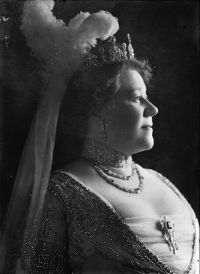 Natalie Harris Hammond,
A Woman's Part in a Revolution
Natalie Harris Hammond,
A Woman's Part in a Revolution
“ Jameson and his men imprisoned at Pretoria, nor did he permit Sir Jacobus de Wet to visit them. He never acquainted himself with the terms of Dr. Jameson's surrender. He commanded Johannesburg to disarm to appease the Boer, and this being successfully accomplished through the self-control of the Reform Committee, he departed with his gout and other belongings, leaving the unarmed betrayed Reformers to shift for themselves. ”
