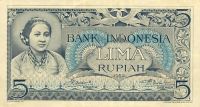
Raden Adjeng Kartini

Raden Adjeng Kartini

Summary

Portrait of Raden Adjeng Kartini Raden Adjeng Kartini Letters of a Javanese princess… (1921)

I love the Hollanders very, very much, and I am grateful for everything that we have gained through them. Many of them are among our best friends, but there are also others who dislike us, for no other reason than we are bold enough to emulate them in education and culture.
In many subtle ways they make us feel their dislike. "I am a European, you are a Javanese," they seem to say, or "I am the master, you the governed." Not once, but many times, they speak to us in broken Malay; although they know very well that we understand the Dutch language.
Source: Wikisource

Portrait of Raden Adjeng Kartini Raden Adjeng Kartini Letters of a Javanese princess… (1921)

There is too much idle talk about the word "prestige," through the imaginary dignity of the under officials. I do not bother about prestige. I am only amused at the manner in which they preserve their prestige over us Javanese.
Sometimes I cannot suppress a smile. It is distinctly diverting to see the great men try to inspire us with awe. I had to bite my lips to keep from laughing outright when I was on a journey not long ago, and saw an Assistant Resident go from his office to his house under the shade of a gold umbrella, which a servant held spread above his noble head.
Source: Wikisource

Portrait of Raden Adjeng Kartini Raden Adjeng Kartini Letters of a Javanese princess… (1921)

Stella, I wish that you could read it. You must know that many of the native rulers rejoice at the action of the Government. The Javanese nobles are in favour with the Government here and in the Motherland, and everything possible is done to help them, and to make them blossom to perfection.
The aristocracy sees with sad eyes how sons of the people are educated, and often even elevated to their ranks by the government because of knowledge, ability and industry. Sons of the people go to European schools and compare favourably in every respect, with the high and honourable sons of the noble.
Source: Wikisource

Get perspective with Kwize: daily news enlightened by great literature