Mammalia

Definition and stakes

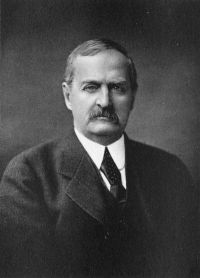
Portrait of William Berryman Scott William Berryman Scott,  A history of land mammals in the Western Hemisphere (1913)

“ As a name for the class Linnæus adopted the term Mammalia, which he formed from the Latin mamma (i.e. teat) to designate those animals which suckle their young; hence the abbreviated form Mammal, which has been naturalized as an English word. “Beast,” as employed in the Bible, and “Quadruped” are not quite the same as mammal, for they do not include the marine forms, such as whales, dolphins, seals, walruses, or the flying bats, and they are habitually used in contradistinction to Man, though Man and all the forms mentioned are unquestionably mammals. ”
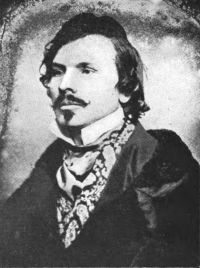
Source: Gutenberg

Thomas E. Williamson; Stephen L. Brusatte; Gregory P. Wilson,  The origin and early evolution of metatherian mammals…

“ The taxon Mammalia consists of numerous extinct lineages as well as three extant clades: the monotremes (egg-laying mammals) , marsupials (“pouched” mammals that give live birth to relatively altricial young) , and placentals (mammals that give live birth to precocial young) . Here, we follow the crown-group definition of Mammalia, which circumscribes the clade as the most recent common ancestor of living monotremes, marsupials, and placentals, and all its descendants (sensu [39] ) . ”
Source: Wikisource

Frank E. Beddard,  Cambridge Natural History Mammalia (1902)

“ The continents and oceans are peopled by rather over three thousand species of Mammalia, a number which is considerably less than that of either birds or reptiles. It seems clear that, so far at any rate as concerns the numbers of families and genera, the mammalian fauna of to-day is less varied than it was during the Mid-tertiary period, the heyday of mammalian life. It is rather remarkable to contrast in this way the mammals and the birds. ”
Source: Wikisource

Get perspective with Kwize: daily news enlightened by great literature