Summary

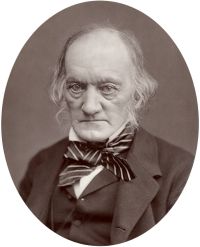
Portrait of Richard Owen Richard Owen The zoology of the voyage of H.M.S. Beagle… (1839)

GLOSSOTHERIUM. “La première chose à faire dans l’étude d’un animal fossile, est de reconnaitre la forme de ses dents molaires; on détermine par-là s’il est carnivore ou herbivore;” says Cuvier, at the commencement of that series of splendid chapters in which the restoration of the extinct Pachyderms of the Paris Basin is recorded. In the present case, however, as in that of the Mammiferous animal whose fossil remains we were last considering, the important organs, to which Cuvier directs our first attention, are wanting.
Source: Gutenberg

Portrait of Richard Owen Richard Owen The zoology of the voyage of H.M.S. Beagle… (1839)

In the adaptation of the frame of a mammiferous quadruped for especial and peculiar actions and modes of life, such as for climbing and living in trees, or for burrowing and seeking concealment in the earth, not only the immediate instruments, as the feet, are modified, but the whole of the osseous and muscular fabric is more or less impressed with corresponding adaptations, whilst at the same time these special adjustments are invariably subordinated to the type of organization which characterizes the group.
Source: Gutenberg

Portrait of Richard Owen Richard Owen The zoology of the voyage of H.M.S. Beagle… (1839)

It is nevertheless quite possible that such may exist, but that it is disguised by the faulty manner in which the skeleton is put up. It strikes me as little probable that two animals which agree so well in the principal particulars of their organization should differ so much in one of the most important. The Megatherium has been proved by later discoveries to possess the same powerful tail as the Megalonyx, and as it corresponds also with the latter entirely in the conformation of its extremities, the same difficulties present themselves against the supposition of its having been a burrower.
Source: Gutenberg

Get perspective with Kwize: daily news enlightened by great literature