Tibia

Definition and stakes

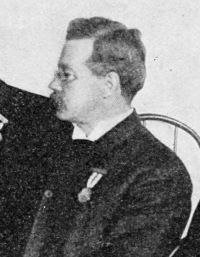
Portrait of Luther Holden Luther Holden,  Landmarks Medical and Surgical (1881)

“ Hence any deviation from this line, one way or the other, indicates more or less dislocation of the tibia. There is a pellet of fat under the ligament, which answers a ‘packing’ purpose—sinking in when the knee is bent; rising when the knee is extended, and bulging on either side of the tendon, almost enough to give the feel of fluctuation.
In a well-formed leg the ligamentum patellæ, the tubercle [Pg 51] of the tibia, and the middle of the ankle should be in the same straight line.
”
Source: Gutenberg

Alexander Miles,  Manual of Surgery Volume Second…

“ Treatment.—After reduction under an anæsthetic these fractures are usually satisfactorily treated in a box splint (Fig. 91) , carried sufficiently high to control the knee-joint. When the head of the tibia is comminuted or split obliquely, weight-extension—direct from the bone, the ice-tong callipers grasping the malleoli or the calcaneus—may be used. Massage and movement are employed from the outset.
Avulsion of the tuberosity of the tibia occasionally occurs in youths, from violent contraction of the quadriceps—as in jumping. The limb is at once rendered powerless
”
Source: Gutenberg

Get perspective with Kwize: daily news enlightened by great literature