Astragalus

Definition and stakes

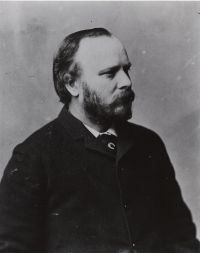
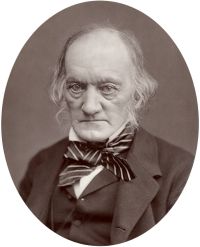
Portrait of Richard Owen Richard Owen,  The zoology of the voyage of H.M.S. Beagle… (1839)

“ If the astragalus, which I have referred with doubt to the Megalonyx, do not actually belong to that genus, it is evidently part of a very closely allied species. Now this astragalus, as we have seen, resembles most closely that of the Megatherium; and since we may infer that the calcaneum, scaphoides, and cuboides had a like correspondence, the inclination of the sole of the foot inwards must have been very slight, as I have determined from examination of the structure and co-adaptation of those bones in the incomplete skeleton of the Megatherium in the London College of Surgeons. ”

Source: Gutenberg

Various,  Popular Science Monthly (1885)

“ Let us consider what he has recorded of a certain bone, well known to the Greeks as being one much used for dice and some other purposes. "Many cloven-footed animals," he says, "have an astragalus, but no many-toed animals have one, neither has man; the lynx has, as it were, half an astragalus, the lion one in the form of a coil; solid-hoofed animals, with the exception of the Indian ass, have no astragalus; swine have not a well-formed astragalus." ”
Source: Wikisource

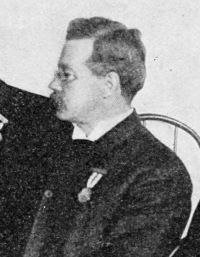
Portrait of George Grant MacCurdy George Grant MacCurdy,  Smithsonian Report/1909 (1910)

“ The most remarkable thing about the astragalus is the special development of the articular surface for the lateral malleolus, development that recalls the condition in anthropoids and climbing mammals. This seems to indicate that, as among anthropoids, the foot of the man of La Chapelle-aux-Saints should repose on its external margin, also that the fibula was relatively more powerful than is the case among modern races. ”
Source: Wikisource

Get perspective with Kwize: daily news enlightened by great literature