Humerus

Definition and stakes

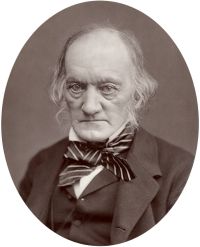
Portrait of Hans Friedrich Gadow Hans Friedrich Gadow,  1911 Encyclopædia Britannica (1910)

“ The humerus with its crests, ridges and processes, presents so many modifications characteristic of the various groups of birds, that its configuration alone is not only of considerable taxonomic value but that almost any genus, excepting, of course, those of Passeres, can be “spotted” by a close examination and comparison of this bone. When the wing is folded the long glenoid surface of the head of the humerus is bordered above by the tuberculum externum or superius, in the middle and below by the tuberculum medium or inferius for the insertion of the coraco-brachialis posterior muscle. ”
Source: Wikisource

Homer Heath Nugent,  A Book of Exposition

“ The humerus has become a lever of the third order; its fulcrum is at the elbow; the weight of the body is attached to it at the shoulder and represents the load which has to be lifted. We also notice that the brachial muscle is attached a long way up the humerus, thus increasing its power very greatly, although the rate at which it helps in lifting the body is diminished. We can see, then, why the humerus is short and the forearm long in anthropoid apes; shortening the humerus makes it more powerful as a lever for lifting the body. That is why anthropoids are strong and agile tree-climbers. ”
Source: Gutenberg

Édouard Cuyer,  Artistic Anatomy of Animals

“ We have already seen, in dealing with the bones, that whilst in the human species the humerus is longer than the forearm, in the dog and cat these two segments of the fore-limb are of equal length, and that the humerus of the horse is, on the contrary, much shorter. Now, let us suppose the human humerus to be shorter than it is in reality; the anterior muscles undergoing, very naturally, the same reduction, will be uncovered only slightly by those above—the deltoid and the great pectoral—or will remain completely hidden by them. ”
Source: Gutenberg

Get perspective with Kwize: daily news enlightened by great literature