Coracoid

Definition and stakes

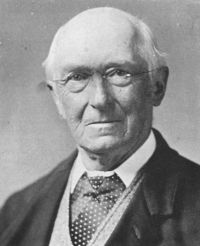
Portrait of H. G. Seeley H. G. Seeley,  Dragons of the Air: An Account of Extinct Flying Reptiles

“ The coracoid bones, instead of being directed laterally outward and upward from the sternum, as among Crocodiles, are directed forward, so as to prolong the [Pg 113] line of the breast bone, named the sternum. The bird's coracoid is sometimes flattened towards the breast bone among Swans and other birds; yet as a rule the coracoid is a slender bar, which combines with the still more slender and delicate blade of the scapula, which rests on the ribs, to make the articulation for the upper arm bone. ”

Source: Gutenberg

Various,  The Popular Science Monthly, September…

“ It is evident that the greater the length of the coracoid the less able would it be to resist the strain brought upon it, and it is also evident that the simultaneous downward stroke of the wings must have a tendency to force the coracoids inwards, or towards one another. Obviously the greater the strain the greater the need of strengthening or bracing the coracoid to resist it, and there are in the shoulder girdle of a bird various devices looking towards this end. ”
Source: Gutenberg

Marion Anne Jenkinson,  Thoracic and Coracoid Arteries In Two Families of Birds…

“ The origin is from the dorsomedial edge of the coracoid at its extreme proximal end, and to a slight extent from the adjacent portion of the manubrium. The origin is medial to the insertion of M. sternocoracoideus. The ventral head passes anterodorsally along the medial edge of the coracoid and joins the dorsal head (not here described) . The combined muscle then inserts by a tendon onto the internal tuberosity of the humerus.
M. costi-sternalis, Figs. 1, 2, and 3. The origin is from the anterior edge of the sternal portion of the first four thoracic ribs.
”
Source: Gutenberg

Get perspective with Kwize: daily news enlightened by great literature