Granule

Definition and stakes

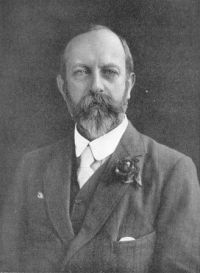
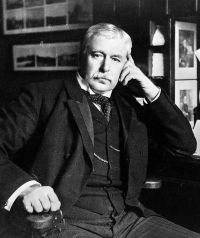
Portrait of Edward Alfred Minchin Edward Alfred Minchin,  1911 Encyclopædia Britannica (1911)

“ The granular theory, as this conception of the living substance is called, has received its extreme elaboration at the hands of Altmann, whose standpoint may be taken as typical of this class of theories. After demonstrating the universal occurrence of granules in protoplasm, Altmann has compared each individual granule to a free-living bacterium, and thus regards a cell as a colony of minute organisms, namely the granules or bio blasts, as he has termed them, living embedded in a common matrix, like a zoogloea colony of bacteria. ”
Source: Wikisource

Various,  Popular Science Monthly (1901)

“ The granule grows, however, at the expense of the hæmaglobin of the corpuscle, and ultimately forms spores (Fig. 3, a—f) . During the life of the parent organism, the products of growth are stored up in the parasite in the form of fine granules.
Fig. 1. Life Cycle of a Gregarine. [Mainly After Siedlecki.]
Minute germs, sporozoites (A) , enter epithelial cells lining the digestive tract of a tunicate. Here they grow to a large size (B, C) , ultimately breaking through a cell-membrane and falling into the lumen of the digestive tract (D) .
”
Source: Wikisource

Paul Ehrlich,  Histology of the Blood, Normal and Pathological

“ Whilst for instance the majority of the granules are more or less rounded forms, in some classes of animals, e.g. in birds, the analogues of the granules of mammalian blood are characterised by a decided crystalline form, and a strong oxyphilia. The substance of the mast cell granulations is also crystalline in some species of animals.
The size of the individual granules is constant in any animal species for every kind of granule—excepting only the mast cells. The eosinophil granulation reaches its greatest size in the horse, where really gigantic examples are found.
”
Source: Gutenberg

Get perspective with Kwize: daily news enlightened by great literature