Gluten

Definition and stakes

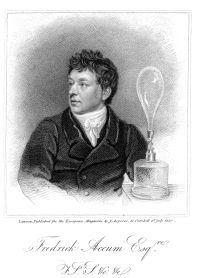
Portrait of Andrew Ure Andrew Ure,  A Dictionary of Arts, Manufactures and Mines

“ Gluten when dried in the air or a stove, diminishes greatly in size, becomes hard, brittle, glistening, and of a deep yellow colour. It is insoluble in ether, in fat and essential oils, and nearly so in water. Alcohol and acetic acid cause gluten to swell and make a sort of milky solution. Dilute acids and alkaline lyes dissolve gluten. Its ultimate constituents are not determined, but azote is one of them, and accordingly when moist gluten is left to ferment, it exhales the smell of old cheese. ”

Source: Gutenberg

E. E. Kellogg,  Science in the Kitchen

“ The gluten of wheat flour, beside being adhesive, is likewise remarkably elastic. This is the reason why wheat flour is much more easily made into light bread than the product of other cereals which contain less or a different quality of gluten. Now if while the atoms of flour are supplied with moisture, they are likewise supplied with some form of gaseous substance, the elastic walls of the gluten cells will become distended, causing the dough to "rise," or grow in bulk, and at the same time become light, or porous, in texture. ”
Source: Gutenberg

T. B. Wood,  The Story of a Loaf of Bread

“ The process of kneading causes the particles of gluten to absorb water and to adhere to one another, so that the dough may be regarded as being composed of innumerable bubbles each surrounded by a thin film of gluten, in or between which lie the starch grains and other constituents of the flour. Each yeast cell as above explained forms a centre for the formation of carbon dioxide gas, which cannot escape at once into the air, and must therefore form a little bubble of gas inside the particular film of gluten which happens to surround it. ”
Source: Gutenberg

Get perspective with Kwize: daily news enlightened by great literature