“ Rubidium-87 and strontium-87 fall on the same spot in the mass spectrum. Therefore, rubidium must be separated chemically from strontium before the strontium can be analyzed in a mass spectrometer. It is done with ion-exchange columns. Four of them are shown in this photograph. The author of this booklet is adding a sample, dissolved in a few drops of hydrochloric acid, to the second column.Let us take as our closed system a mica crystal in a mass of granite. ”
Strontium
Definition and stakes
Strontium, a chemical element (symbol Sr, atomic number 38), is an alkaline earth metal known for its reactivity and presence in minerals such as celestine and strontianite. Researchers like Henry Faul have explored its role in geochronology, connecting rubidium-strontium dating with rock formation. Mendeleyev emphasized its place in the periodic table, drawing comparisons with calcium and barium.
Albert L. Latter studied its biological absorption, while Arnold James Cooley described its chemical compounds. Winifred Elsie Brenchley examined its interaction with plants, and Michael Faraday looked into its reactivity. These varied studies highlight strontium’s dual nature—as a stable element and a radioactive isotope—crucial in both natural phenomena and human applications.
Quotes about “strontium”
“ If we take a piece from near the middle of this body of rock and if this piece is much larger than the largest constituent grain in it, then we have a fair sample of a closed system—the whole rock. The only difficulty arises from the fact that few rocks are sufficiently impermeable to solutions to retain argon, and many rocks contain so much common strontium that rubidium-strontium analysis 40 is impractical. ”
Dmitry Ivanovich Mendeleyev, The Principles of Chemistry, Volume II
“ Gallium, indium, and thallium belong to the uneven series, and there should be elements of the even series in group III. corresponding with calcium, strontium, and barium in group II. These elements should in their oxides R2O3 present basic characters of a more energetic kind than those shown by alumina, just as calcium, strontium, and barium give more energetic bases than magnesium, zinc, and cadmium. Such are yttrium and ytterbium, which occur in a rare Swedish mineral called gadolinite, and are therefore termed the gadolinite metals. ”
Related terms
Authors who wrote about “strontium”
Henry Faul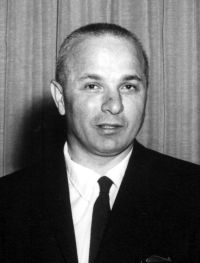 Albert L. Latter
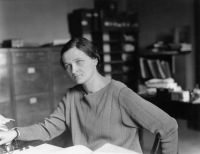 Cecilia Payne-GaposchkinVariousArnold James Cooley
 Gaston TissandierDmitry Ivanovich Mendeleyev
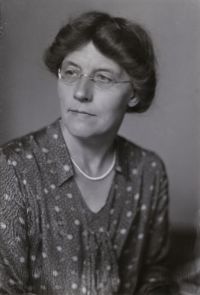 Winifred Elsie Brenchley
 Michael Faraday
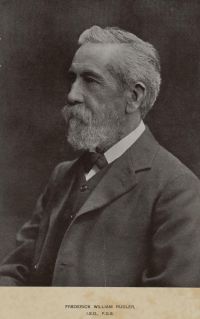 Frederick William RudlerAnonymous
 Annie BesantF. W. Lengemann
 Agnes M. ClerkeEmma M. ConverseKen Keyes, Jr.Leonard James SpencerE. W. Seabrook HullGeorge IlesW. Mattieu Williams
Albert L. LatterCecilia Payne-GaposchkinVariousArnold James CooleyGaston TissandierDmitry Ivanovich MendeleyevWinifred Elsie BrenchleyMichael FaradayFrederick William RudlerAnonymousAnnie BesantF. W. LengemannAgnes M. ClerkeEmma M. ConverseKen Keyes, Jr.Leonard James SpencerE. W. Seabrook HullGeorge IlesW. Mattieu Williams