Phosphorescence

Definition and stakes

Harry Marshall Ward, Vernon Herbert Blackman and Robert Muir,  1911 Encyclopædia Britannica (1910)

“ Beyerinck’s view that it occurs at the moment peptones are worked up into the protoplasm cannot be regarded as proved, and the same must be said of the suggestion that the phosphorescence is due to the oxidation of phosphoretted hydrogen. The conditions of phosphorescence are, the presence of free oxygen, and, generally, a relatively low temperature, together with a medium containing sodium chloride, and peptones, but little or no carbohydrates. ”

Source: Wikisource

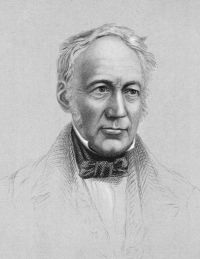
Portrait of John Henry Pepper John Henry Pepper,  The Boy's Playbook of Science

“ Phosphorescence is still more curiously exemplified by holding a sheet of white paper, a calcined oyster-shell, or even the hand, in the sun's rays, and then retiring quickly to a darkened room, when they appear to be luminous, and visible even after the light has ceased to fall upon them. ”
Source: Gutenberg

William Edwards Henderson,  An Elementary Study of Chemistry

“ Chemical properties. Exposed to the air phosphorus slowly combines with oxygen, and in so doing emits a pale light, or phosphorescence, which can be seen only in a dark place. The heat of the room may easily raise the temperature to the kindling point of phosphorus, when it burns with a sputtering flame, giving off dense fumes of oxide of phosphorus. It burns with dazzling brilliancy in oxygen, and combines directly with many other elements, especially with sulphur and the halogens. On account of its great affinity for oxygen it is always preserved under water. ”
Source: Gutenberg

Get perspective with Kwize: daily news enlightened by great literature