Cube

Definition and stakes

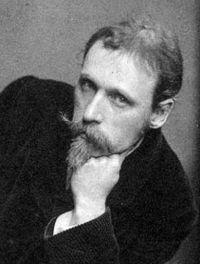
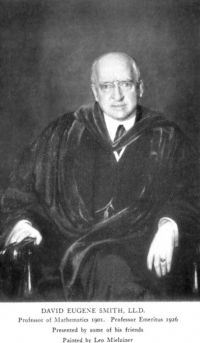
Portrait of Edwin Abbott Abbott Edwin Abbott Abbott,  Flatland (1884)

“ There, before my ravished eye, a Cube, moving in some altogether new direction, but strictly according to Analogy, so as to make every particle of his interior pass through a new kind of Space with a wake of its own—shall create a still more perfect perfection than himself, with sixteen terminal Extra-solid angles, and Eight solid Cubes for his Perimeter. And once there, shall we stay our upward course? In that blessed region of Four Dimensions, shall we linger on the threshold of the Fifth, and not enter therein? ”
Source: Wikisource

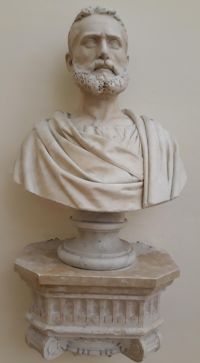
Portrait of Vitruvius Pollio Vitruvius Pollio,  The Ten Books on Architecture

“ A cube is a body with sides all of equal breadth and their surfaces perfectly square. When thrown down, it stands firm and steady so long as it is untouched, no matter on which of its sides it has fallen, like the dice which players throw on the board. The Pythagoreans appear to have drawn their analogy from the cube, because the number of lines mentioned will be fixed firmly and steadily in the memory when they have once settled down, like a cube, upon a man's understanding. ”
Source: Gutenberg

Various,  Popular Science Monthly (1895)

“ Take the example of an ordinary cube. The child looks at it, and there is a visual impression formed of its color, of the length of each side, of the area of a surface, of the combination of the surfaces so as to give rise to the idea of solidity. The simple ideas are combined into the more complex idea—the visual one of a cube. But by the aid of touch other qualities can be ascertained. The hardness, weight, sharpness of edges and angles, smoothness or roughness of surfaces, form the tactual idea of a cube. ”
Source: Wikisource

Get perspective with Kwize: daily news enlightened by great literature