Summary

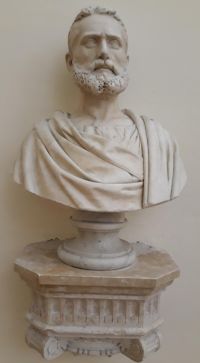
Portrait of Vitruvius Pollio Vitruvius Pollio,  The Ten Books on Architecture

“ For however great it is, it cannot be wholesome, because, as there is no shade in the way, the intense force of the sun draws up and carries off the moisture from the flat plains with its heat, and if any water shows itself there, the lightest and purest and the delicately wholesome part of it is summoned away by the air, and dispersed to the skies, while the heaviest and the hard and unpleasant parts are left in springs that are in flat places. ”
Source: Gutenberg

Portrait of Vitruvius Pollio Vitruvius Pollio,  The Ten Books on Architecture

“ Those, therefore, who from tender years receive instruction in the various forms of learning, recognize the same stamp on all the arts, and an intercourse between all studies, and so they more readily comprehend them all. This is what led one of the ancient architects, Pytheos, the celebrated builder of the temple of Minerva at Priene, to say in his Commentaries that an architect ought to be able to accomplish much more in all the arts and sciences than the men who, by their own particular kinds of work and the practice of it, have brought each a single subject to the highest perfection. ”
Source: Gutenberg

Portrait of Vitruvius Pollio Vitruvius Pollio,  The Ten Books on Architecture

“ Hence, it is the new taste that has caused bad judges of poor art to prevail over true artistic excellence. For how is it possible that a reed should really support a roof, or a candelabrum a pediment with its ornaments, or that such a slender, flexible thing as a stalk should support a figure perched upon it, or that roots and stalks should produce now flowers and now half-length figures? Yet when people see these frauds, they find no fault with them but on the contrary are delighted, and do not care whether any of them can exist or not. ”
Source: Gutenberg

Get perspective with Kwize: daily news enlightened by great literature