Geochronology

Definition and stakes

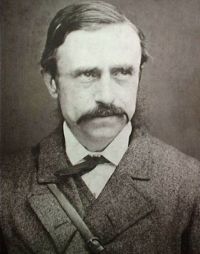
Portrait of Robert S. Ball Robert S. Ball,  Time and Tide: A Romance of the Moon

“ But we have another system of chronology derived from a wholly different system of ideas; it too relates to periods of vast duration, and, like our great tidal periods, extends to times anterior to human history, or even to the duration of human life on this globe. The facts of geology open up to us a majestic chronology, the epochs of which are familiar to us by the succession of strata forming the crust of the earth, and by the succession of living beings whose remains these strata have preserved. ”
Source: Gutenberg

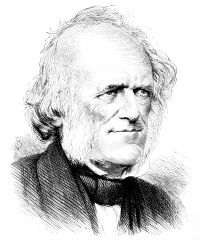
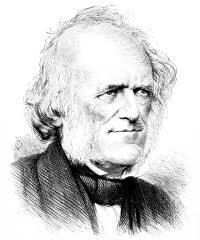
John Phillips,  A Treatise on Geology (1852)

“ Now, as all historic records end, for each country, with the surface,—terminate at some point of man's history posterior to the preparation of that tract for his residence, we see how far more ancient than the historic date of the human race is the series of productions which lie below the surface. The limit of least antiquity of the scale of geological time is in every country beyond the date of the present surface. The series of strata is so ancient, that even its uppermost and newest term in every country is older than the race of man now existing there ”
Source: Wikisource

James Schoenwetter,  How Old Is It? The Story of Dating in Archeaology

“ Crossdating is thus of vital importance and is constantly undertaken. The archaeologist tries to employ both absolute and relative clocks to find out the age of a site. Stratigraphy yields a series of relative dates for artifacts within the site; geologic-climatic and pollen dating yield a series of dates for types of sediment and samples collected in association with those artifacts; tree ring dates yield the absolute age of the site which allows the pollen, stratigraphic and geologic-climatic dates to be comprehended in terms of absolute age. ”
Source: Gutenberg

Get perspective with Kwize: daily news enlightened by great literature