Stratigraphy

Definition and stakes

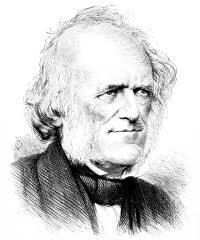
Portrait of Thomas C. Chamberlin Thomas C. Chamberlin,  Geology (1906)

“ Fossils as means of correlation.—While stratigraphy was thus, in the earliest stages, the main reliance in determining the order of events, and biology was the chief gainer, in the end stratigraphy received ample compensation, if indeed it did not become the greater beneficiary; for at no known and accessible place is there a complete succession of sedimentary beds. There are great series here and there, but their connections with one another are more or less concealed by surface formations or water-bodies. ”
Source: Gutenberg

C. K. Leith,  The Economic Aspect of Geology

“ Stratigraphy and paleontology are concerned with the sedimentary and life history of the earth. The determination of the ages of the earth's strata and of the conditions of their deposition is required in the practice of economic geology. For example, a detailed knowledge of the succession of rocks and their ages, as determined by fossils and other stratigraphic evidence, is vital to the interpretation of conditions in an oil or coal field, and to the successful exploration and development of its deposits. ”
Source: Gutenberg

Frederick Chapman,  Australasian Fossils: A Students' Manual of Palaeontology

“ Upon « 27 » this foundation the work of later geologists has been firmly established; and students of strata and of fossils work hand in hand.
[1] “Strata identified by Organised Fossils,” 1816-1819; and “Stratigraphical System of Organised Fossils,” 1817.
Stratigraphy.—
That branch of geology which discusses the nature and relations of the various sediments of the earth’s crust, and the form in which they were laid down, is called Stratigraphy. From it we learn that in bygone times many of those places that are now occupied by dry land have been, often more than once, covered by the sea
”
Source: Gutenberg

Get perspective with Kwize: daily news enlightened by great literature