Summary

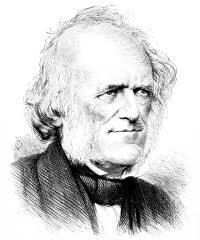
Portrait of Sir Charles Lyell Sir Charles Lyell A Manual of Elementary Geology

No doubt the vacant space left by the missing rocks, after extensive denudation, is less imposing to the imagination than a vast thickness of conglomerate or sandstone, or the bodily presence as it were of a mountain-chain, with all its inclined and curved strata. But the denuded tracts speak a clear and emphatic language to our reason, and, like repeated layers of fossil nummulites, corals or shells, or like numerous seams of coal, each based on its under clay full of the roots of trees, still remaining in their natural position, demand an indefinite lapse of time for their elaboration.
Source: Gutenberg

Portrait of Sir Charles Lyell Sir Charles Lyell A Manual of Elementary Geology

When we desire to classify, it is necessary to contemplate entire groups of strata in the aggregate; but if we wish to understand the mode of their formation, and to explain their origin, we must think only of the minute subdivisions of which each mass is composed. We must bear in mind how many thin leaf-like seams of matter, each containing the remains of myriads of testacea and plants, frequently enter into the composition of a single stratum, and how vast a succession of these strata unite to form a single group!
Source: Gutenberg

Portrait of Sir Charles Lyell Sir Charles Lyell A Manual of Elementary Geology

We must remember, also, that piles of volcanic matter, like the Plomb du Cantal, which rises in the immediate neighbourhood of Aurillac, are themselves equally the result of successive accumulation, consisting of reiterated sheets of lava, showers of scoriæ, and ejected fragments of rock.—Lastly, we must not forget that continents and mountain-chains, colossal as are their dimensions, are nothing more than an assemblage of many such igneous and aqueous groups, formed in succession during an indefinite lapse of ages, and superimposed upon each other.
Source: Gutenberg

Get perspective with Kwize: daily news enlightened by great literature