Schist

Definition and stakes

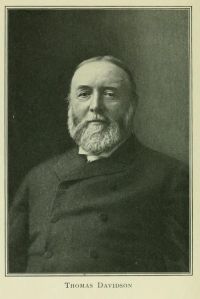
Portrait of Thomas Davidson Thomas Davidson,  Chambers's Twentieth Century Dictionary 1908… (1908)

“ Schist, shist, n. a term properly applied to crystalline rocks with a foliated structure, as mica-schist, hornblende-schist, &c.—indurated clay-rocks with a fissile structure are sometimes erroneously described as schists.—adjs. Schistā′ceous, slate-gray; Schist′ic, Schist′ous, Schist′ose, like schist: slaty.—n. Schistos′ity, quality of being schistose. [Fr. schiste—Gr. schistos—schizein, to split.]
Schizæa, skī-zē′a, n. a genus of ferns, with sporangia ovate, sessile, and arranged in spikes or panicles. [Gr. schizein, to split.]
”

Source: Wikisource

John MacCulloch,  On the Hill of Kinnoul (1817)

“ In many parts innumerable detached fragments may be seen imbedded in the trap, the whole of the schist displaying a greater disorder and confusion than the sandstone does in any of the instances hitherto described. In a few places another singularity may be remarked. Veins of different dimensions, and ramifying in different directions, are to be found traversing considerable portions of the rock, and in some instances terminating in the schist, with which they are continuous. ”
Source: Wikisource

Leonard James Spencer,  1911 Encyclopædia Britannica, Volume 18… (1911)

“ In gneisses and crystalline schists, quartz, felspar, mica, talc, amphibole, &c. are important constituents.
Minerals of Sedimentary Rocks.—By the weathering and disintegration of igneous and metamorphic rocks the various minerals set free and the products of decomposition of others supply the material of sedimentary rocks; thus sandstones consist largely of quartz, shales of kaolin and other clay minerals. Those minerals (e.g. gem-stones and gold) which resist the action of weathering processes are found as water-worn pebbles and grains in detrital deposits.
”
Source: Wikisource

Get perspective with Kwize: daily news enlightened by great literature