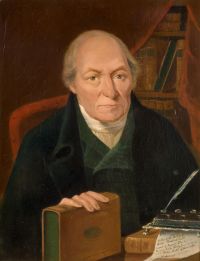
James Hutton

Definition and stakes

Edward Huntington Williams,  A History of Science — Volume 3

“ James Hutton, of Edinburgh, physician, farmer, and manufacturing chemist—patient, enthusiastic, level-headed devotee of science. Inspired by his love of chemistry to study the character of rocks and soils, Hutton had not gone far before the earth stood revealed to him in a new light. He saw, what generations of predecessors had blindly refused to see, that the face of nature everywhere, instead of being rigid and immutable, is perennially plastic, and year by year is undergoing metamorphic changes. ”
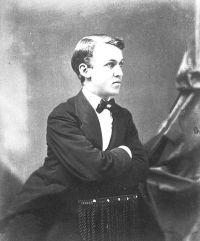
Source: Gutenberg

Thomas Roscoe Rede Stebbing,  The Zoologist (1897)

“ The name of James Hutton is far less dazzling, by far less widely celebrated, than that of Linnæus; but it has been shown by those competent to judge that Hutton's services to science were of the order which can truly be described as epoch-making. His 'Theory of the Earth' upset many ancient opinions as deeply rooted as mountain chains, as widely spread as the main oceans. Contrary to the apparent evidence of men's senses, he maintained that the crust of the globe is a great piece of machinery perpetually at work. ”
Source: Wikisource

Edward Huntington Williams,  A History of Science — Volume 3

“ NEPTUNISTS VERSUS PLUTONISTS
In the mean time, James Hutton's theory that continents wear away and are replaced by volcanic upheaval gained comparatively few adherents. Even the lucid Illustrations of the Huttonian Theory, which Playfair, the pupil and friend of the great Scotchman, published in 1802, did not at once prove convincing. The world had become enamoured of the rival theory of Hutton's famous contemporary, Werner of Saxony—the theory which taught that "in the beginning" all the solids of the earth's present crust were dissolved in the heated waters of a universal sea.
”
Source: Gutenberg

Get perspective with Kwize: daily news enlightened by great literature