Summary

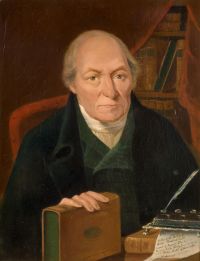
Portrait of William Hutton William Hutton The History of the Roman Wall/Part 1… (1802)

It is impossible to conceive a human being in a more dreadful situation than that of a borderer; keeping, in the day-time, a continual look out, and in the dark and solitary night, attentive to every minute sound, which excited terrible ideas, and augmented those ideas into the approach of an enemy. His property ever open to plunder; his house, the only thing immovable, exposed to the flames; his mind perpetually tortured by the rack, surrounded by enemies, all bred up in savage principles, wishing to take his life, and he who could take it, might with impunity
Source: Wikisource

Portrait of William Hutton William Hutton The History of the Roman Wall/Part 1… (1802)

How much delight would it afford the modern antiquarian eye, could he survey the works of Agricola, Hadrian, and Severus, as they then appeared! the noblest sight ever beheld in this Island! the work of strength, of genius, and of years! Men have been deified for trifles compared to this admirable structure; a Wall seventy miles in length, furnished with eighteen Cities, eighty-one Castles, and three hundred and thirty Turrets, with all their mounds, roads, ramparts, and astonishing apparatus! One sight would raise the mind to a rapturous sublimity.
Source: Wikisource

Portrait of William Hutton William Hutton The History of the Roman Wall/Part 1… (1802)

Had there been no other argument for a union between the two kingdoms, the blood which cried from the borders was sufficient. Much has been said, both for and against it; but one short remark will decide the question.—If the members of a vast family are obliged to reside together, whether is it better to live upon equality, and in harmony, promoting each other's interest, or, each to do the other all the mischief in their power? It may be said, "the Scots lost their sovereignty."
Source: Wikisource

Get perspective with Kwize: daily news enlightened by great literature