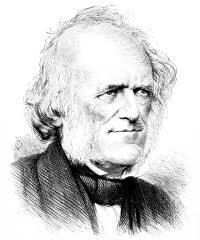
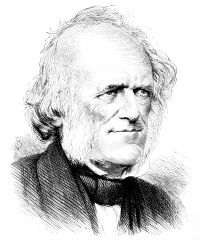
Charles Lyell

Definition and stakes

Arthur Bower Griffiths,  Biographies of Scientific Men (1912)

“ As an epoch-maker, Sir Charles Lyell had to pass through the fire of hostile criticism. He knew, however, that he had discovered truth, as interpreted by Nature's book—the rocks—and that he could with equanimity listen to the babble of little minds. Moreover, he was entirely free from vanity, egotism, and jealousy—in fact, a true philosopher and gentleman, with kind feelings and appreciation for the work of others. Science owes much to Lyell, and for centuries to come, yea for all time, he will receive the homage of posterity. ”
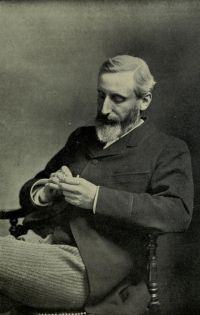
Source: Wikisource

Various,  Graham's Magazine, Vol. XXXV, No…

“ Sir Charles Lyell is the exact opposite of those English tourists who emphasize the little peculiarities of American character, and pass off their caricatures as national traits. He is a rigid man of science, without sufficient humor or imagination to seize upon individual peculiarities, and confines himself altogether to facts and sensible remarks. He is essentially a moderate man in mind as well as in disposition, and thoroughly conscientious, good-natured and unimpassioned. His eye for scenery is that of a man of science, not of a poet ”
Source: Gutenberg

Portrait of Grant Allen Grant Allen,  Popular Science Monthly (1882)

“ The firstborn of a wealthy and cultivated family, with ample means and ample leisure, endowed by nature with literary and scientific potentialities, brought up in the stimulating atmosphere of his own home, of Oxford, and of the London literary world, surrounded from his childhood upward by men of science and men of letters, it would have been strange if Charles Lyell had not turned out exactly such a man as we all know him to have been. ”
Source: Wikisource

Get perspective with Kwize: daily news enlightened by great literature