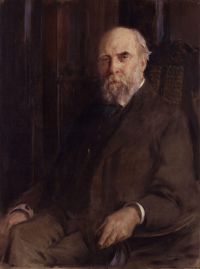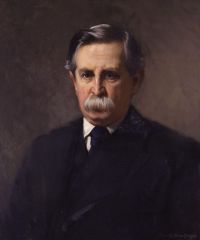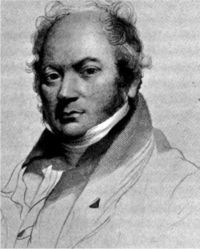
John Thomas Smith

Biographical details

Portrait of John Thomas Smith John Thomas Smith Nollekens and his times (1829)

The expression of a feature,—an eye for instance, so fascinating to the beholder, in which the very focus and soul of the modeller is seated,—if carelessly finished, might be lost for ever, particularly if too much of the stone were cut away. What an acquisition, then, an excellent carver must be in the studio of the classic Sculptor of high fame, whose mind must necessarily be engaged upon his designs; and whose hand, had it once been master of the tool, for the want of practice, could not manage it with so much ease as that of the artist who is continually employed on the marble only
Source: Wikisource

Portrait of John Thomas Smith John Thomas Smith A Book for a Rainy Day; or, Recollections of the Events of the Years 1766-1833

Combing the wig in the theatre and the drawing-room was a habit, like twirling the moustache. Dryden pictures the wits rising as one man in the pit of the theatre and beginning to comb their wigs while they stared at a new masked beauty. “It became the mark of a young man of ton to be seen combing his periwig in the Mall, or at the theatre” (Fairholt: Costume in England) . Hats were not worn on perukes that cost forty or fifty pounds. In Wycherley’s Love in a Wood (1672) we read: “A lodging is as unnecessary a thing to a widow that has a coach, as a hat to a man that has a good peruke.”
Source: Gutenberg

Portrait of John Thomas Smith John Thomas Smith Lives of Famous London Beggars

These will go in trains of twenty or thirty persons, from Hammersmith to Covent Garden Market, joining in one national melody, and perfuming the air with their baskets of ripe strawberries.
Of all people the poor Irish are the most anxious to gain employment, and are truly valuable examples of industry. They sleep less than other labourers; for at the dawn of day they assemble in flocks at their usual stands for hire,—namely, Whitechapel, Queen Street, Cheapside, and on the spot formerly occupied by St Giles's pound, at the ends of Oxford Street and Tottenham Court Road.
Source: Gutenberg

Get perspective with Kwize: daily news enlightened by great literature