Summary

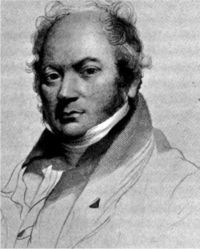
Portrait of John Thomas Smith John Thomas Smith Lives of Famous London Beggars

PLATE I.
George Dyball, a blind beggar of considerable notoriety, and his dog Nelson.
The next plate is of a beggar well known at fairs near the Metropolis. He is certainly blind, and perhaps one of the most cunning and witty of his tribe; for in order that his blindness may be manifest, he literally throws up his eyeballs, as if desirous of exemplifying the following lines in Hudibras:—
"As men of inward light are wont
To turn their optics in upon't."
Source: Gutenberg

Portrait of John Thomas Smith John Thomas Smith Lives of Famous London Beggars

I began with Monarchs, and have ended with Ballad-Singers, Chimney-Sweepers, and Beggars. But they that fill the highest and the lowest classes of human life, seem, in many respects, to be more nearly allied than even themselves imagine. A skilful anatomist would find little or no difference, in dissecting the body of a king and that of the meanest of his subjects; and a judicious philosopher would discover a surprising conformity, in discussing the nature and qualities of their minds.
Source: Gutenberg

Portrait of John Thomas Smith John Thomas Smith Lives of Famous London Beggars

In the mean time, a slight sketch of the state and progress of mendicity in former ages may be neither unacceptable nor without its use.
The Beggar's calling, if not one of the most respectable, may doubtless be regarded as one of the most ancient. In every part of the globe where man is congregated, the inequality of his condition, the too frequent indolence of his habits, or the shifts to which human misery is occasionally reduced, will compel him to depend for his support on the generosity of his fellow-creatures, and even sometimes lead him to prefer this disgraceful state of existence.
Source: Gutenberg

Get perspective with Kwize: daily news enlightened by great literature