Mesenchyme

Definition and stakes

George Albert Boulenger, Albert Charles Lewis Gotthilf Günther and John Graham Kerr,  1911 Encyclopædia Britannica, Volume 14… (1911)

“ Organs of the Mesenchyme.—In vertebrates as in all other Metazoa, except the very lowest, there are numerous cell elements which no longer form part of the regularly arranged epithelial layers, but which take part in the formation of the packing tissue of the body. Much of this forms the various kinds of connective tissue which fill up many of the spaces between the various epithelial layers; other and very important parts of the general mesenchyme become specialized in two definite directions and give rise to two special systems of organs. ”
Source: Wikisource

Various,  Encyclopaedia Britannica, 11th Edition…

“ In the Vertebrata the whole of the mesoderm has at first the mesenchyme form. Afterwards, when the body-cavity split appears, the bulk of it assumes a kind of modified epithelial condition, which later on yields, by a process of outflow very similar in its character to what has been supposed to occur in the Echinoderm blastula, a considerable mesenchyme of the reticulate character. Mesenchyme is the tissue which in Vertebrate embryology has frequently been called embryonic connective tissue. This name is no doubt due to the fact that it was supposed to consist of isolated stellate cells. ”
Source: Gutenberg

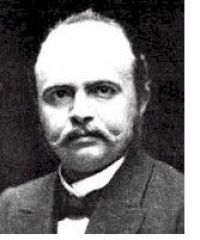
Portrait of Hans Driesch Hans Driesch,  The Science and Philosophy of the Organism

“ The mesenchyme ring, the coelum, the middle-intestine, are instances of such organs. It is important to notice well that the word elementary is always understood here with regard to visible morphogenesis proper and does not apply to what may be called elementary in the physiological sense. An elementary process in our sense is a very distinct act of form-building, and an elementary organ is the result of every one of such acts. ”
Source: Gutenberg

Get perspective with Kwize: daily news enlightened by great literature