Summary

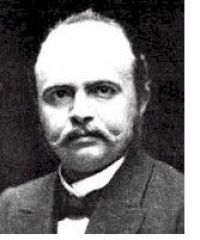
Portrait of Hans Driesch Hans Driesch The Science and Philosophy of the Organism

We have called one type of history evolution, the other cumulation; but how have these higher types been reached? Has historical enumeration itself, which was supposed to stand at the beginning of all analysis, or has “history” itself in its strictest sense, as relating to the single as such, risen unaided into something more than “history”? By no means: history has grown beyond its bounds by the aid of something from without. It is unhistorical elements that have brought us from mere history to more than history.
Source: Gutenberg

Portrait of Hans Driesch Hans Driesch The Science and Philosophy of the Organism

In denying any real explanatory value to the concept of natural selection I am far from denying the action of natural selection. On the contrary, natural selection, to some degree, is self-evident; at least as far as it simply states that what is incompatible with permanent existence cannot exist permanently, it being granted that the originating of organic individuals is not in itself a guarantee of permanency. Chemical compounds, indeed, which decompose very rapidly under the conditions existing at the time when they originated may also be said to have been eliminated by “natural selection.”
Source: Gutenberg

Portrait of Hans Driesch Hans Driesch The Science and Philosophy of the Organism

But could such a theory—irrespective of all the experimental facts which contradict it—could such a theory stand before the one fact, that there occurs a genesis of that complex-equipotential system, of which our one single egg forms a part? Can you imagine a very complicated machine, differing in the three dimensions of space, to be divided hundreds and hundreds of times and in spite of that to remain always the same whole?
Source: Gutenberg

Get perspective with Kwize: daily news enlightened by great literature