Rib

Definition and stakes

B. F. Kaupp,  The anatomy of the domestic fowl (1918)

“ Ligaments of the Ribs.—The thick inferior end of the sternal portion of the true rib has two small articular heads, which articulate with two depressions in the articular surface of the sternum. This articulation is held firm by a capsular ligament.
The upper end of the sternal rib forms an almost perfect right angle with the inferior end of the dorsal rib with which it is connected by a joint provided with a synovial apparatus and a capsular ligament. This arrangement allows free movement outward and inward and is the main joint in respiration.
”
Source: Gutenberg

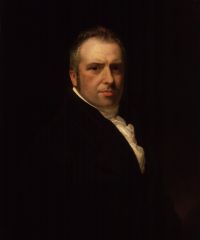
Portrait of John Ruskin John Ruskin,  Modern Painters, Volume 3 (of 5…

“ Thus the rib c, entirely contradictory, by the direction of his life and energy, of the general intentions to the tree, is but a short-lived rib; d, not quite so opposite to his fate, lives longer; e, accommodating himself still more to the spirit of progress, attains a greater length still; and the largest rib of all is the one who has not yielded at all to the erratic disposition of the others when spring came, but, feeling quite as happy about the spring as they did, nevertheless took no holiday, minded his business, and grew straightforward. ”
Source: Gutenberg

Frederick Gymer Parsons,  1911 Encyclopædia Britannica (1911)

“ A rib is an elongated bone, and as a rule possesses a head, a neck, a tubercle and a shaft. The head usually has two articular surfaces, and is connected to the side of the body of two adjacent thoracic vertebrae ; the neck is a constricted part of the bone, uniting the head to the shaft; the tubercle, close to the junction of the shaft and neck, is the part which articulates with the transverse process of the vertebra. ”
Source: Wikisource

Get perspective with Kwize: daily news enlightened by great literature