“ But Phoebus Apollo came to sacred Ilium; for the wall of the well-built city was a care to him, lest the Greeks, contrary to fate, should overthrow it that day. The other ever-existing gods, however, repaired to Olympus, some indeed indignant, but others greatly boasting. And they sat down beside their father, the collector of dark clouds: but Achilles slew at once the Trojans themselves, and their solid-hoofed steeds. And as when a smoke, ascending from a burning city, reaches the wide heaven, but the wrath of the gods has excited it; it creates toil to all, and sends griefs upon many ”
Ilium
Definition and stakes
Ilium, the ancient city central to Homeric legend, embodies both myth and historical investigation, serving as a focal point for literary and archaeological discussion. Homer’s Iliad depicts it as a city doomed by destiny, its downfall predicted amid celestial conflict and human sorrow, while Heinrich Schliemann’s excavations and disputes regarding its precise location reflect a lasting interest in its physical remnants.
Strabo and George Grote emphasize its geopolitical and cultural importance, connecting it to Roman heritage and Hellenistic learning. From epic verse to scholarly analysis, Ilium’s complex story illustrates how its legendary and material aspects have influenced collective memory across the ages.
Quotes about “Ilium”

Heinrich Schliemann,
Troy and Its Remains
“ The only person who ever doubted its identity with Ilium, the city of Priam, was Demetrius of Scepsis, who maintained that the famous old city had stood on the site of the village of the Ilians (Ἰλιέων κώμη) , which lies 30 stadia (3 geog. miles) to the south-east. ”
“ Go quickly, fleet Iris, having left the seat of Olympus, order magnanimous Priam to ransom his dear son to Ilium, going to the ships of the Greeks; and to carry gifts to Achilles, which may appease his mind, alone; nor let another man of the Trojans go with him. Let some aged herald accompany him, who may guide his mules and well-wheeled chariot, and may bear back to the city the dead body which noble Achilles has slain; nor let death at all be a cause of anxiety to his mind, nor at all a terror ”
George Grote,
History of Greece, Volume 01 (of 12…
“ The dignity and power of Ilium being thus prodigiously enhanced, we cannot doubt that the inhabitants assumed to themselves exaggerated importance as the recognized parents of all-conquering Rome. Partly, we may naturally suppose, from the jealousies thus aroused on the part of their neighbors at Skêpsis and Alexandreia Trôas—partly from the pronounced tendency of the age (in which Kratês at Pergamus and Aristarchus at Alexandria divided between them the palm of literary celebrity) towards criticism and illustration of the old poets—a blow was now aimed at the mythical legitimacy of Ilium. ”
Richard Claverhouse Jebb,
Encyclopædia Britannica, Ninth Edition
(1888)
“ He offered sacrifice to the Ilian Athene; and after the peace with Antiochus (189 B.C.) the Romans annexed Rhoeteum and Gergis to Ilium, " not so much in reward of recent services, as in memory of the source from which their nation sprang." The later history of Ilium is little more than that of Roman benefits. ”
“ For well I know this in my mind and soul; a day will arrive when sacred Ilium shall perish, and Priam, and the people of Priam skilled in the ashen spear. But to me the grief that is to come will not be so great on account of the Trojans, neither for Hecuba herself, nor for king Priam, nor for my brothers, who, many and excellent, are destined to fall in the dust beneath hostile men, as for thee, when some one of the brazen-mailed Greeks shall lead thee away weeping, having deprived thee of the day of freedom. ”
Homer,
The Iliad of Homer
(1860)
“ But him again the messenger, the slayer of Argus, addressed: "O old man, thou hast certainly spoken all these things with propriety. But come, tell me this, and relate it truly, whither now dost thou send so many and such valuable treasures among foreigners? Whether that these, at least, may remain safe to thee? Or do ye all, now fearing, desert sacred Ilium? For so brave a hero was he, who died, thy son; he was not in aught inferior to the Greeks in battle." ”
Heinrich Schliemann,
Troy and Its Remains
“ Wherever I investigated the site of the ancient village, I always found the primary soil at a very inconsiderable depth, and nowhere the slightest trace of a town ever having stood there. Hence Demetrius of Scepsis and Strabo, who adopted his theory, were greatly mistaken. The town of Ilium was only named Ilium Novum about 1000 years after its complete destruction; in fact this name was only given to it in the year 1788 by Lechevalier, the author of the theory that the Homeric Ilium stood on the heights of Bunarbashi. ”
1911 Encyclopædia Britannica (1911)
“ The chief Greek towns in the Troad were Ilium in the north, Assus in the south and Alexandria Troas in the west. The site of the Greek Ilium is marked by the low mound of Hissarlik (“place of fortresses”) in the Trojan plain, about 3 m. from the Hellespont. Exactly at what date it was founded on the top of earlier remains is uncertain (perhaps the 7th century) ; but it was not a place of any importance till the Hellenistic age. ”
Strabo, The Geography of Strabo, Volume 2…
“ The whole of the coast lies below the present Ilium; the part near the port of the Achæans,1394 distant from the present Ilium about 12 stadia, and thirty stadia more from [Pg 359] the ancient Ilium,1395 which is higher up in the part towards Ida.Near the Sigeium is a temple and monument of Achilles, and monuments also of Patroclus and Antilochus.1396 The Ilienses perform sacred ceremonies in honour of them all, and even of Ajax. But they do not worship Hercules, alleging as a reason that he ravaged their country. ”
“ And as when a man gives the hide of a huge ox, saturated with grease, to his people to stretch, but they, having received, stretch it, standing apart from each other in a circle, and straightway the moisture exudes, and the oily matter enters, many pulling it, till it is stretched in every direction; so they, on both sides, dragged the body here and there in a small space; for the mind of the Trojans, on the one hand, eagerly hoped to draw him to Ilium, but of the Greeks, on the other, to the hollow ships. Around him arose a fierce tumult ”
George Grote,
History of Greece, Volume 01 (of 12…
“ There is every reason for presuming that the Ilium visited by Xerxês and Alexander was really the “holy Ilium” present to the mind of Homer; and if so, it must have been inhabited, either by Greeks or by some anterior population, at a period earlier than that which Strabo assigns. History recognizes neither Troy the city, nor Trojans, as actually existing ”
Heinrich Schliemann,
Troy and Its Remains
“ I venture to hope that the civilized world will not only not be disappointed that the city of Priam has shown itself to be scarcely a twentieth part as large as was to be expected from the statements of the Iliad, but that, on the contrary, it will accept with delight and enthusiasm the certainty that Ilium did really exist, that a large portion of it has now been brought to light, and that Homer, even although he exaggerates, nevertheless sings of events that actually happened. ”
George Grote,
History of Greece, Volume 03 (of 12…
“ The author of the Iliad, as he has congregated together a vast body of the different sections of Greeks for the attack of the consecrated hill of Ilium, so he has also summoned all the various inhabitants of Asia Minor to coöperate in its defence, and he has planted portions of the Kilikians and Lykians, whose historical existence is on the southern coast, in the immediate vicinity of the Troad. ”
George Grote,
History of Greece, Volume 01 (of 12…
“ The Romans, proud of their origin from Troy and Æneas, treated Ilium with signal munificence; not only granting to it immunity from tribute, but also adding to its domain the neighboring territories of Gergis, Rhœteium and Sigeium—and making the Ilieans masters of the whole coast [805] from the Peræa (or conti [p. 328] nental possessions) of Tenedos (southward of Sigeium) to the boundaries of Dardanus, which had its own title to legendary reverence as the special sovereignty of Æneas. ”
Richard Claverhouse Jebb,
Encyclopædia Britannica, Ninth Edition
(1888)
“ It is to such writers as these that Strabo refers when he indicates the general consent of his authorities. In favour of the claim of the Greek Ilium, on the other hand, there are only two literary witnesses, and these, as we have seen, are alike worthless. Equally valueless from a critical point of view is the fact that the Ilian claim was sometimes allowed by soldiers or statesmen who wished to utilize Trojan memories. ”
J. A. Zahm,
From Berlin to Bagdad and Babylon
(1922)
“ Troy, or Ilium, as the excavations of Schliemann and Dörpfeld have shown, was destroyed and rebuilt no fewer than seven times. During the Roman period it was known as Ilium Novum and was honored as the city of Æneas and consequently, as the parent of Rome. It was because of this fabulous origin of the Romans that Constantine first planned to establish the seat of empire on the plain of Troy instead of locating it on the site occupied by Byzantium between the Bosphorus and the Golden Horn. ”
Charles Bucke, Ruins of Ancient Cities (Vol. 2 of 2…
“ After that occurrence, Ilium was chiefly indebted to Lysimachus. He enlarged its temple, encircled the town with walls to the extent of five miles, and collected into it the inhabitants of the old cities about it, which had gone to decay. Games also [Pg 464] were subsequently instituted. He also patronised Alexandria Troas.Some time after the Troia was invaded by Philip, last king of Macedon, because Attalus, who had assumed the title of King of Pergamum, had given himself out as an ally of the Romans. At a subsequent period, the Gauls marched into Ilium ”
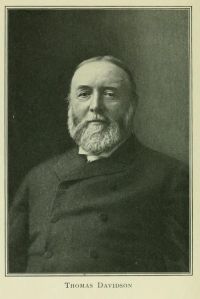
Thomas Davidson,
Chambers's Twentieth Century Dictionary 1908…
(1908)
“ Il′eum, the lower part of the smaller intestine in man; Il′ium, the upper part of the hip-bone:—pl. Il′ia.—Ileus, Ileac, or Iliac passion, a severe colic with vomiting, &c. [Fr., through a Low L. iliacus—ilia, the flanks, the groin.] Iliad, il′i-ad, n. an epic poem by Homer, giving an account of the destruction of Ilium or ancient Troy. [L. Ilias, Iliadis—Gr. Ilias, Iliados, a poem relating to Ilium, the city of Ilos, its founder.] ”
Thomas Henry Huxley,
Quarterly Journal of the Geological Society of London
(1870)
“ The bones referred to and described by Riley and Stutchbury are vertebræ, ribs of two kinds, a clavicle, two "coracoids," a humerus, a "radius," two femora, an "ischium," a tibia, a fibula, metacarpal and metatarsal bones, and ungual phalanges. The "coracoid" figured is, as I suspected, a fragmentary ilium. The "radius" I take to be a tibia. The parts of the skeleton which diagnose the Dinosaurian nature of these reptiles, in addition to the teeth, are:—1, a caudal vertebra with the chevron bone; 2, an ilium; 3, a tibia. ”
George Grote,
History of Greece, Volume 01 (of 12…
“ Arrian, though a native of Nicomedia, holding a high appointment in Asia Minor, and remarkable for the exactness of his topographical notices, describes the visit of Alexander to Ilium, without any suspicion that the place with all its relics was a mere counterfeit: Aristidês, Dio Chrysostom, Pausanias, Appian, and Plutarch hold the same language. [809] But modern writers seem for the most part to have taken up the [p. 330] supposition from Strabo as implicitly as he took it from Dêmêtrius. ”
Andrew Lang,
Homer and His Age
“ In the AEthiopis (about 776 B.C.) men are made immortal after death, and are worshipped as heroes, an idea foreign to Iliad and Odyssey. (8) There is a savage ritual of purification from blood shed by a homicide (compare Eumenides, line 273) . This is unheard of in Iliad and Odyssey, though familiar to Aeschylus. (9) Achilles, after death, is carried to the isle of Leuke. (10) The fate of Ilium, in the Cyclic Little Iliad, hangs on the Palladium, of which nothing is known in Iliad or Odyssey. ”
Strabo, The Geography of Strabo, Volume 2…
“ Would it not be more easy to believe that at the time of the siege of Troy this city was no longer on the summit of the mountain, nor so near its ancient acropolis as it was at first; and that the inhabitants moved under the reign of Ilus, as Plato says, and as Homer leads us to conclude, to the entrance of the plain and to the lower rising grounds of Ida? The level ground on the top mountain which rises above Bounar-bachi, and on which it has been attempted to trace the contour of the walls of ancient Ilium and of its citadel, is more than 3200 toises in circumference. ”
“ There are many Grecian women throughout Hellas and Phthia, daughters of chieftains who defend the cities. Whomsoever of these I may choose, I will make my beloved wife; and there my generous soul very much desires that I, wedding a betrothed spouse, a fit partner of my bed, should enjoy the possessions which aged Peleus hath acquired. For not worth my life are all the [treasures] which they say the well-inhabited city Ilium possessed, whilst formerly at peace, before the sons of the Greeks arrived ”
Polybius, The Histories of Polybius, Vol…
“ At the sight of the city utterly perishing amidst the flames Scipio burst into tears, and stood long reflecting on the inevitable change which awaits cities, nations, and dynasties, one and all, as it does every one of us men. This, he thought, had befallen Ilium, once a powerful city, and the once mighty empires of the Assyrians, Medes, Persians, and that of Macedonia lately so splendid. And unintentionally or purposely he quoted,—the words perhaps escaping him unconsciously,—254“The day shall be when holy Troy shall fallAnd Priam, lord of spears, and Priam’s folk.” And on my asking him boldly ”
Thomas Henry Huxley,
Quarterly Journal of the Geological Society of London
(1870)
“ The determination of the structure of the shoulder-girdle threw open the homology of this bone, which clearly could not be a clavicle, whatever else it might be. The alternative position once more lay in the pelvis, and this time between the ischium and the pubis; and as the ilium was bird-like, might not the ischium, or pubis, be also expected to be ornithic in form? At any rate the bone answered remarkably well to the ischium of one of the Ratitæ. Resemblances to the structures found in some birds had already been noted by Prof. Owen [1] in the sacrum of the Dinosauria ”
Augustus Taber Murray, The Iliad — Book XVII (1924)
“ And if this man were to come, a corpse, to the great city of king Priam, and we should hale him forth from out the battle, straightway then would the Argives give back the goodly armour of Sarpedon, and we should bring his body into Ilios; for such a man is he whose squire hath been slain, one that is far the best of the Argives by the ships, himself and his squires that fight in close combat. But thou hadst not the courage to stand before great-hearted Aias, facing him eye to eye amid the battle-cry of the foemen, nor to do battle against him, seeing he is a better man than thou. ”
Homer,
The Iliad (Butler) — Book XXI
(1898)
“ I could then wash the sweat from off me in the river and in the evening return to Ilius. But why commune with myself in this way? Like enough he would see me as I am hurrying from the city over the plain, and would speed after me till he had caught me- I should stand no chance against him, for he is mightiest of all mankind. What, then, if I go out and meet him in front of the city? His flesh too, I take it, can be pierced by pointed bronze. Life is the same in one and all, and men say that he is but mortal despite the triumph that Jove son of Saturn vouchsafes him. ”
Homer,
The Iliad (Butler) — Book XXIV
(1898)
“ Now when Priam and Idaeus had driven past the great tomb of Ilius, they stayed their mules and horses that they might drink in the river, for the shades of night were falling, when, therefore, Idaeus saw Mercury standing near them he said to Priam, "Take heed, descendant of Dardanus; here is matter which demands consideration. I see a man who I think will presently fall upon us; let us fly with our horses, or at least embrace his knees and implore him to take compassion upon us? ”
Augustus Taber Murray, The Iliad — Book XXI (1924)
“ Until Patroclus met his day of fate, even till then was it more pleasing to me to spare the Trojans, and full many I took alive and sold oversea; but now is there not one that shall escape death, whomsoever before the walls of Ilios God shall deliver into my hands—aye, not one among all the Trojans, and least of all among the sons of Priam. Nay, friend, do thou too die; why lamentest thou thus? Patroclus also died, who was better far than thou. And seest thou not what manner of man am I, how comely and how tall? A good man was my father, and a goddess the mother that bare me ”
“ And this moreover will I say to thee, and do thou lay it to thy heart; whene’er I too be of eager mind to lay waste a city where is the race of men that are dear to thee, hinder thou not my wrath, but let me be, even as I yield to thee of free will, yet with soul unwilling. For of all cities beneath sun and starry heaven that are the dwelling of mortal men, holy Ilios was most honoured of my heart, and Priam and the folk of Priam of the good ashen spear. ”