Summary

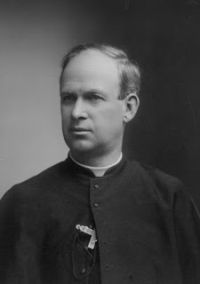
Portrait of J. A. Zahm J. A. Zahm From Berlin to Bagdad and Babylon (1922)

At Nisibis we reached the present eastern terminus of the Bagdad Railway. Thence to Mosul, about a hundred and fifty miles distant, we journeyed on the backs of dromedaries. I did not, however, regret that this slower means of locomotion necessitated our spending more time in a region that recalled Libya’s solitary waste,
Its barren rocks, parched earth and hills of sand. Not at all. I have always loved the desert, its solitude, its tranquillity, its restfulness. In it,
Far from the madding crowd’s ignoble strife, I have spent many of the most peaceful and enjoyable days of my life.
Source: Gutenberg

Portrait of J. A. Zahm J. A. Zahm From Berlin to Bagdad and Babylon (1922)

The scenery along the railroad in the Amanus Range and in the plain on the way to Aleppo is much like that of the Taurus Mountains and of Cilicia Campestris, where one can truly say with the poet Bryant
There is a smile on the fruit, and a smile on the flower,
And a laugh from the brook that runs to the sea. Everywhere one comes upon places that are famous in history, both sacred and profane. Everywhere one passes through lands that during thousands of years, witnessed the devastations of Assyrians and Hittites, Persians and Greeks, Romans and Parthians, Mongols and Saracens and Turks.
Source: Gutenberg

Portrait of J. A. Zahm J. A. Zahm From Berlin to Bagdad and Babylon (1922)

For from time immemorial the peninsula of Asia Minor has been the great battlefield between the Orient and the Occident. Topographically it is like a great bridge over which, as has been well said, “the religion, art and civilization of the East found their way into Greece; and the civilization of Greece, under the guidance of Alexander the Macedonian, passed back again across the same bridge to conquer the East and revolutionize Asia as far as the heart of India. Persians, Arabs, Mongols, Turks, have all followed the same route in the many attempts that Asia has made to subdue the West.”
Source: Gutenberg

Get perspective with Kwize: daily news enlightened by great literature