Summary

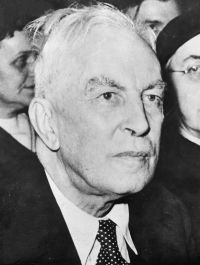
Portrait of Arnold Toynbee Arnold Toynbee Turkey: a Past and a Future

Yet who is to help Turkey forward if not the Greeks, Armenians, and Syrians, who constitute more than a quarter of the population of the Empire? The Turks, the least gifted of the races living in Turkey, are themselves only a minority of the population, and are still far behind the Arabs in culture. Where is there any Turkish trade, Turkish handicraft, Turkish industry, Turkish art, Turkish science? They have even borrowed their law and religion from the conquered Arabs, and their language, so far as it has been given literary form.
Source: Gutenberg

Portrait of Arnold Toynbee Arnold Toynbee Turkey: a Past and a Future

Here far-sighted engineers and stronghanded rulers turned the waters of Babylon into waters of life, and the Sawâd became a great heart of civilisation, breathing in man-power—Sumerians and Amorites and Kassites and Aramaeans and Chaldeans and Persians and Greeks and Arabs—and breathing out the works of man—grain and wool and Babylonish garments, inventions still used in our machine-shops, and emotions still felt in our religion.
Source: Gutenberg

Portrait of Arnold Toynbee Arnold Toynbee Turkey: a Past and a Future

All the props of Ottoman dominion in Asia have fallen away, but nothing dooms it so surely as the breath of life that is stirring over the dormant lands and peoples once more. The cutting of the Suez Canal has led the highways of commerce back to the Nearer East; the democracy and nationalism of Europe have been extending their influence over Asiatic races. On whatever terms the War is concluded, one far-reaching result is certain already: there will be a political and economic revival in Western Asia, and the direction of this will not be in Ottoman hands.
Source: Gutenberg

Get perspective with Kwize: daily news enlightened by great literature