Maronites

Definition and stakes

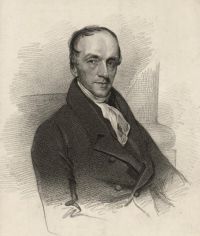
Portrait of Rufus M. Jones Rufus M. Jones,  Eli and Sibyl Jones, Their Life and Work

“ The Maronites are thought by some to have taken their name from Maroon, an abbot who lived near the Orontes in the sixth century. He was considered as a saint by these people, though by the pope he was deemed a heretic. In the time of the Crusades the Maronites joined the Christian army from the West, and so came in contact with the Roman Church. They are divided into four orders—Jesuits, Franciscans, Lazarists, and Capuchins—over whom one patriarch is the governor. ”
Source: Gutenberg

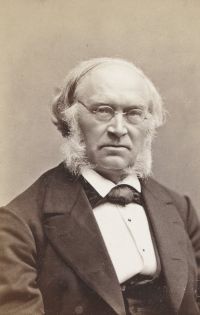
Portrait of Ebenezer Cobham Brewer Ebenezer Cobham Brewer,  Character Sketches of Romance, Fiction and the Drama…

“ The Maronites owe their name to J. Maron, their founder; the Druses to Durzi, who led them out of Egypt into Syria. The patriarch of the Maronites resides at Kanobin; the hakem of the Druses at Deir-el-kamar. The Maronites, or “Catholics of Lebanon,” differ from the Roman Catholics in several points, and have a pope or patriarch of their own. In 1860 the Druses made on them a horrible onslaught, which called forth the intervention of Europe.
Marotte (2 syl.) , a footman of Gorgibus; a plain bourgeois, who hates affectation.
”
Source: Gutenberg

Various,  Encyclopaedia Britannica, 11th Edition…

“ MARONITES (Arab. Mawarina) , a Christian people of the Ottoman Empire in communion with the Papal Church, but forming a distinct denomination. The original seat and present home of the nucleus of the Maronites is Mt Lebanon; but they are also to be found in considerable force in Anti-Lebanon and Hermon, and more sporadically in and near Antioch, in Galilee, and on the Syrian coast. Colonies exist in Cyprus (with a large convent near Cape Kormakiti) , in Alexandria, and in the United States of America. ”
Source: Gutenberg

Get perspective with Kwize: daily news enlightened by great literature