“ But among intelligent, firmly rooted beings like ourselves, matters are, of course, on a less crude and direct plane. What among lesser creatures is a question of tactics belongs, for us, to the realm of strategy." Pater's tone grew confiding. ”
Tactic
Definition and stakes
Tactic refers to the specific methods used to achieve immediate objectives within a broader strategy. From Sun Tzu’s emphasis on adaptability in The Art of War to Carl von Clausewitz’s distinction between tactics and strategy in On War, the theme has been examined through military, social, and philosophical perspectives.
Jean Jaurès viewed tactics as practical instruments for achieving socialist aims, while Anne Manning emphasized the divide between theoretical knowledge and real-world application. Robert Abernathy contrasted tactical details with strategic generalization, highlighting the complex nature of human conflict. These viewpoints collectively show tactic as both a technical field and an expression of human flexibility in the pursuit of objectives.
Quotes about “tactic”
Sun Tzu, The Art of War (1910)
“ Do not repeat the tactics which have gained you one victory, but let your methods be regulated by the infinite variety of circumstances. ”
Sun Tzu, The Art of War (2000)
“ In making tactical dispositions, the highest pitch you can attain is to conceal them; conceal your dispositions, and you will be safe from the prying of the subtlest spies, from the machinations of the wisest brains. ”
Charles Jean Jacques Joseph Ardant du Picq, Battle Studies; Ancient and Modern Battle
“ But discipline alone does not constitute superior tactics. Man in battle, I repeat, is a being in whom the instinct of self-preservation dominates, at certain moments, all other sentiments. Discipline has for its aim the domination of that instinct by a greater terror. ”
Anne Manning, The Year Nine: A Tale of the Tyrol
“ But they were, after all, unskilled tacticians, as far as science went: men rather of deeds than words, who felt a certain consciousness of what they themselves could do, and what they could expect from one another. ”
Sun Tzu, The Art of War (1910)
“ All men can see the tactics whereby I conquer, but what none can see is the strategy out of which victory is evolved. ”
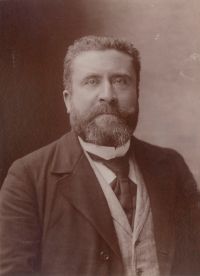 Jean Jaurès,
Studies in Socialism — Liebknecht on Socialist Tactics
(1906)
Jean Jaurès,
Studies in Socialism — Liebknecht on Socialist Tactics
(1906)
“ Not that we wish to lessen the importance of tactics. But tactics are only a means of obtaining an end; and whereas the end presents itself before us firm and immovable, we can argue about tactics. Questions of tactics are practical questions and should be absolutely distinguished from questions of principle. ”
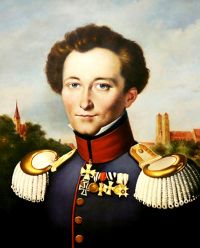
“ Tactics and strategy are two activities mutually permeating each other in time and space, at the same time essentially different activities, the inner laws and mutual relations of which cannot be intelligible at all to the mind until a clear conception of the nature of each activity is established. ”
Sun Tzu, The Art of War (1910)
“ “Conform to the enemy’s tactics until a favourable opportunity offers; then come forth and engage in a battle that shall prove decisive.” ”
James A. Moss, Manual of Military Training
“ To begin with, you want to bear in mind that there is nothing difficult, complicated or mysterious about applied minor tactics—it is just simply the application of plain, every-day, common horse sense—the whole thing consists in familiarizing yourself with certain general principles based on common sense and then applying them with common sense. ”
 Victor Hugo,
Cromwell
(1909)
Victor Hugo,
Cromwell
(1909)
“ These few instructive lines contain the everlasting tactics of envious routine against growing talent—tactics which are still followed in our own day, and which, for example, added such a curious page to the youthful essays of Lord Byron. ”
William Duane, A military dictionary
“ Tactics consist of a knowlege of order, disposition, and formation, according to the exigency of circumstances in warlike operations. These dispositions are severally made, or one disposition follows another by means of manœuvres and evolutions. Hence the necessity of paying the greatest attention to the first principles of military art; and hence the absurdity and ignorance of some men, who would pass for great and able tacticians, without having grounded themselves in the elements of their professions. ”
 Edmund Yates,
The Rock Ahead: A Novel. (Vol. 1…
Edmund Yates,
The Rock Ahead: A Novel. (Vol. 1…
“ By an excellent system of tactics, the mainspring of which was to make himself sought instead of to seek, and to speak his mind unreservedly upon all points on which he was consulted, taking care never to interfere in cases where his opinion was not asked, he obtained a complete ascendency over the young man, who, after a very short time, made him overseer, not merely of his stable, but of his house, his establishment, and his estates. ”
 Friedrich von Bernhardi,
Cavalry
Friedrich von Bernhardi,
Cavalry
“ For if we take all the various principles evolved from different tactical situations and jumble them illogically together, or discuss them from points of view which are not closely based on the probable happenings of reality, we run a danger of confusing the judgment instead of clearing it. ”
baron de Antoine Henri Jomini, The Art of War
“ Strategy directs armies to the decisive points of a zone of operations, and influences, in advance, the results of battles; but tactics, aided by courage, by genius and fortune, gains victories.Grand tactics is the art of making good combinations preliminary to battles, as well as during their progress. The guiding principle in tactical combinations, as in those of strategy, is to bring the mass of the force in hand against a part of the opposing army, and upon that point the possession of which promises the most important results. ”
Jacobus X, Discipline in School and Cloister
“ Under these masters he gets no rest, he rises early, and is often flogged. A little older, and it is the tactician and gymnastic instructor who now flog and torture him.’ And there have been philosophers to praise and poets to sing the happy results of this brutal method. ”
Sun Tzu, The Art of War (1910)
“ The stronger men will be in front, the jaded ones will fall behind, and on this plan only one-tenth of your army will reach its destination. For 罷, see II. § 14. The moral is, as Ts‘ao Kung and others point out: Don’t march a hundred li to gain a tactical advantage, either with or without impedimenta. ”
United States. Department of Defense, The Armed Forces Officer
“ Likewise, in such a field as tactical discussion, the minds of men are more likely to be won, and their imagination stirred, through giving them the reasoning behind a technique or method than by telling them simply how a thing is done. ”
 Lajos Kossuth,
Select Speeches of Kossuth
Lajos Kossuth,
Select Speeches of Kossuth
“ If I had undertaken the practical direction of military operations, and anything went amiss, I feared that my conscience would torture me, as guilty of the fall of my country, as I had not been familiar with military tactics. ”
Sun Tzu, The Art of War (2000)
“ The difficulty of tactical maneuvering consists in turning the devious into the direct, and misfortune into gain. ”
Sun Tzu, The Art of War (1910)
“ Calthrop translates: “The conditions necessary for victory may be present, but they cannot always be obtained,” which is more or less unintelligible.5. Security against defeat implies defensive tactics; ability to defeat the enemy means taking the offensive. ”
Oliver Prescott Hiller, A Chapter on Slavery (1860)
“ We set out on a course of action, planned, as we believe, from benevolent motives, — and we push on, in our own strength, determined to overcome every obstacle, and by main force to break down all opposition, and to effect our object at every hazard: — and what is the result? we accomplish nothing: we find ourselves, after all our efforts, farther from the point aimed at than when we set out. ”
Baron John Arbuthnot Fisher Fisher, Memories, by Admiral of the Fleet… (1919)
“ A habit of mind is thus formed which is wholly wanting in initiative, and in war the initiative is everything. I agree with you absolutely:—“Make up your mind, and strike! and strike hard and without mercy.” ”
 Bayard Taylor,
The Lands of the Saracen
Bayard Taylor,
The Lands of the Saracen
“ We have but one more process to undergo, and the attendant already stands at the head of our couch. This is the course of passive gymnastics, which excites so much alarm and resistance in the ignorant Franks. It is only resistance that is dangerous, completely neutralizing the enjoyment of the process. Give yourself with a blind submission into the arms of the brown Fate, and he will lead you to new chambers of delight. ”
 C. J. Dennis,
Backblock Ballads and Later Verses
(1918)
C. J. Dennis,
Backblock Ballads and Later Verses
(1918)
“ Must we, for their neglect, bear all the blame? Nay, Master, we have come to love our land! But see, the task Thou givest us is great; The load is heavy and the way is long! Hold Thou our enemy without the gate; When we have rested then shall we be strong. ”
James Milne, The Black Colonel
“ True strategy in any tight place, military or civil, is based on a knowledge of human nature, what the enemy will do. That entails the gift of imagination, and there was a touch of it in the disposition going on before my eyes. ”
 Robert Welles Ritchie,
The Passing of a Dictator
(1912)
Robert Welles Ritchie,
The Passing of a Dictator
(1912)
“ Out of ten thousand conflicting spurs of action comes, in the snapping of a finger, a sinister unity of purpose, which knows not the individual brain that conceived it, nor the logic of its action. Ten thousand clods, jumbled in confusion, are instantly turned into a single straight furrow. ”
“ The interesting fact to the leader is not alone that these habits control so absolutely, but that any habit may be easily and unconsciously formed by repetition of the act or thought, and that a habit once formed is overcome only by conscious effort and even by determined action of the will. ”
Charles H. Ham, Mind and Hand: Manual Training the Chief Factor in Education (1900)
“ If the manipulation is a simple one the silence is only broken by the sound of the blast and the stroke of the hammer—the students understand every turn of the iron and every blow struck by the instructor—but if the manipulation is complicated, involving a fresh principle, the instructor is saluted by a volley of questions, and he often pauses to answer them. ”
William James, The Principles of Psychology, Volume 2…
“ We, however, call the more abundant mass of ideas ourselves; and, talking of its effort as our effort, and of that of the smaller mass of ideas as the resistance, [500] we say that our effort sometimes overcomes the resistances offered by the inertias of an obstructed, and sometimes [Pg 576] those presented by the impulsions of an explosive, will. Really both effort and resistance are ours, and the identification of our self with one of these factors is an illusion and a trick of speech. ”
 Edward Carpenter,
The Healing of Nations and the Hidden Sources of Their Strife
Edward Carpenter,
The Healing of Nations and the Hidden Sources of Their Strife
“ They take sides, and in default of any more rational method, resort to the arbitrament of force. The stakes are high, and if on the one hand the game calls forth an immense amount of resource, skill, alertness, self-control, endurance, courage, and even tenderness, helpfulness, and fidelity ”
John McElroy, Si Klegg, Complete, Books 1-6
“ With what an air of conscious power; of evident mastery of all that might confront them; of calm, unflinching determination for the conflict, those men moved and acted. They felt themselves part of a mighty machine, that had its work before it, and would move with resistless force to perform the appointed task. ”
 Sallust,
The War with Catiline
(1931)
Sallust,
The War with Catiline
(1931)
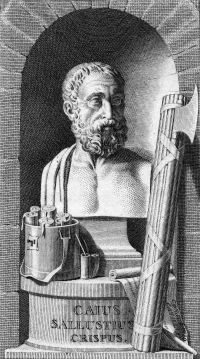
“ Yet for a long time mortal men has discussed the question whether success in arms depends more on strength of body or excellence of mind; for before you begin, deliberation is necessary, when you have deliberated, prompt action. Thus each of these, [1] being incomplete of itself, requires the other’s aid. ”
 Richard Francis Burton,
The Sentiment of the Sword — The Ninth and Last Evening
Richard Francis Burton,
The Sentiment of the Sword — The Ninth and Last Evening
“ But if your opponent remain obstinately upon the purely defensive, showing you that he intends to await the attack, you feel that something must be done. Gain ground by half measures, masking the intention as much as you can with the body easily seated and every movement in equilibrium, so as to spring back if required with all your activity. ”
Various, Punch, or the London Charivari…
“ The complex play of action and motive—the purpose blunted by overmuch thinking, the spurs to dull revenge, the self-contempt, the assumed antic disposition, at times the real mental disturbance—all this was set before us with a fine skill and resource. ”
William James, The Principles of Psychology, Volume 2…
“ Now our spontaneous way of conceiving the effort, under all these circumstances, is as an active force adding its strength to that of the motives which ultimately prevail. When outer forces impinge upon a body, we say that the resultant motion is in the line of least resistance, or of greatest traction. ”
William James, Talks To Teachers On Psychology…
“ Our volitional habits depend, then, first, on what the stock of ideas is which we have; and, second, on the habitual coupling of the several ideas with action or inaction respectively. How is it when an alternative is presented to you for choice, and you are uncertain what you ought to do? ”
Ian Hamilton, Gallipoli Diary, Volume 2
“ How many times has success seemed to be on the point of crowning our efforts, and yet, on each occasion, just as we are beginning to see light through the tangle of obstacles, preparing for an assault, or whatever it may be, something occurs to upset the apple-cart. ”
 Jacob Abbott,
Gentle Measures in the Management and Training of the Young
Jacob Abbott,
Gentle Measures in the Management and Training of the Young
“ Indeed, when we reflect upon the subject, we see what a difficult task we undertake in such contests—it being nothing less than that of forcing the formation of a volition in a human mind. We can easily control the bodily movements and actions of another person by means of an external coercion that we can apply, and we have various indirect means of inducing volitions; but in these contests we seem to come up squarely to the work of attempting, by outward force, to compel the forming of a volition in the mind ”
 Bertrand Russell,
War and Non-Resistance
(1915)
Bertrand Russell,
War and Non-Resistance
(1915)
“ No one who holds that human conduct ought to be such as to promote certain ends, no matter what ends may be selected, will expect any absolute hard-and-fast rules of conduct to which no possible exception can be found. ”
W. T. Stace, A critical history of Greek philosophy
“ How then is reason to gain control over the appetites? Only by practice. It is only by continual effort, by the constant exercise of self-control, that the unruly passions can be tamed. Once brought under the yoke, their control becomes habit. ”
Emory Adams Allen, The Golden Gems of Life; Or, Gathered Jewels for the Home Circle
“ Vicious habits, when opposed, offer the most vigorous resistance on the first attack; at each successive encounter this resistance grows weaker, until, finally, it ceases altogether, and the victory is achieved. ”
 A. E. W. Mason,
The Philanderers
A. E. W. Mason,
The Philanderers
“ But add to your difficulties the continual presence of an enemy, outnumbering you incalculably, always on the alert for you to slacken discipline for a second, and remember you are not marching to safety, but from it. ”
 Charles James Lever,
The Dodd Family Abroad, Vol. II
Charles James Lever,
The Dodd Family Abroad, Vol. II
“ And as to tact, it is, after all, like skill in a game which, however available against a clever adversary, is of little value when opposed to those who neither recognize the rules, nor appreciate the nice points of the encounter. ”
William James, The Principles of Psychology, Volume 2…
“ The ideal impulse appears, in comparison with this, a still small voice which must be artificially reinforced to prevail. Effort is what reinforces it, making things seem as if, while the force of propensity were essentially a fixed quantity, the ideal force might be of various amount. But what determines the amount of the effort when, by its aid, an ideal motive becomes victorious over a great sensual resistance? The very greatness of the resistance itself. ”
William James, Essays in Radical Empiricism
“ But in this actual world of ours, as it is given, a part at least of the activity comes with definite direction; it comes with desire and sense of goal; it comes complicated with resistances which it overcomes or succumbs to, and with the efforts which the feeling of resistance so often provokes; and it is in complex experiences like these that the notions of distinct agents, and of passivity as opposed to activity arise. ”
 Barry Pain,
"Mon Abri" v. "Mon Repos"
(1913)
Barry Pain,
"Mon Abri" v. "Mon Repos"
(1913)
“ I shall be playing it for self-defence. By the time they've heard that for four hours and a half, they will have learned a lesson—the lesson of give-and-take. I don't think we shall get any more trouble. ”
 Anton Chekhov,
My Life and other Stories — My Life
(1920)
Anton Chekhov,
My Life and other Stories — My Life
(1920)
“ Other methods of fighting are necessary, strong, bold, quick! If you want to be useful then you must leave the narrow circle of common activity and try to act directly on the masses! First of all, you need vigorous, noisy, propaganda. ”
