
“ Then Aias leaped on and smote his shield, nor did the spear pass clean through, yet shook he Sarpedon in his eagerness. He gave ground a little way from the battlement, yet retreated not wholly, since his heart hoped to win renown. Then he turned and cried to the godlike Lykians: “O Lykians, wherefore thus are ye slack in impetuous valour. Hard it is for me, stalwart as I am, alone to break through, and make a path to the ships, nay, follow hard after me, for the more men, the better work.” ”
Lykians
Definition and stakes
The theme of “Lykians” has been addressed by authors such as Herodotus, Homer, George Grote and John Fiske. It is often associated with terms like Lycon, Sarpedon, Athens, Lycaon and Lycurgus.
Quotes about “Lykians”
Herodotus, The History of Herodotus — Volume 1
“ Now while Sarpedon reigned over them, they were called by the name which they had when they came thither, and by which the Lykians are even now called by the neighbouring tribes, namely Termilai; but when from Athens Lycos the son of Pandion came to the land of the Termilai and to Sarpedon, he too having been driven out by his brother namely Aigeus, then by the name taken from Lycos they were called after a time Lykians. ”
Herodotus, The History of Herodotus — Book I: Called Clio (1890)
“ The Lykians however have sprung originally from Crete (for in old time the whole of Crete was possessed by Barbarians) : and when the sons of Europa, Sarpedon and Minos, came to be at variance in Crete about the kingdom, Minos having got the better in the strife of parties drove out both Sarpedon himself and those of his party: and they having been expelled came to the land of Milyas in Asia, for the land which now the Lykians inhabit was anciently called Milyas, and the Milyans were then called Solymoi. ”
 George Grote,
History of Greece, Volume 03 (of 12…
George Grote,
History of Greece, Volume 03 (of 12…
“ He carried his arms, however, with full success, over other parts of the continent of Asia Minor, until he had subdued the whole territory within the river Halys, excepting only the Kilikians and the Lykians. The Lydian empire thus reached the maximum of its power, comprehending, besides the Æolic, Ionic, and Doric Greeks on the coast of Asia Minor, the Phrygians, Mysians, Mariandynians, Chalybes, Paphlagonians, Thynian and Bithynian Thracians, Karians, and Pamphylians. ”
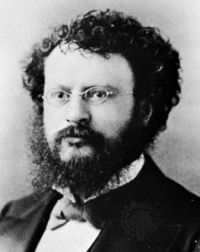 John Fiske,
Myths and Myth-Makers
John Fiske,
Myths and Myth-Makers
“ Among the Algonquins the sun-god Michabo was represented as a hare, his name being compounded of michi, "great," and wabos, "a hare"; yet wabos also meant "white," so that the god was doubtless originally called simply "the Great White One." The same naive process has made bears of the Arkadians, whose name, like that of the Lykians, merely signified that they were "children of light"; and the metamorphosis of Kallisto, mother of Arkas, into a bear, and of Lykaon into a wolf, rests apparently upon no other foundation than an erroneous etymology. Originally Lykaon was neither man nor wolf ”
Peder Mariager, Pictures of Hellas: Five Tales of Ancient Greece
“ Myrtale did not lose a single word, but while Lycon was kneeling before her she noticed that his tearful eyes were very handsome, and that a delicate odor of ointment rose from his hair. The power of trifles has always been great, especially with women. This perfume made a strange impression upon her. For a moment she forgot that Lycon was a slave, and compared him in her mind with the son of their neighbor the baker, who after having spent ten days in Athens went as foppishly clad and moved as stiffly as the Athenian dandies. ”
Petronius Arbiter, The Satyricon — Volume 01: Introduction
“ Lycas flew into a towering rage when our flight was established for certain, and railed bitterly at Doris, whom he considered as the moving factor in it. Of the hard words and the beating he gave her I will say nothing, for the particulars are not known to me, but I will affirm that Tryphaena, who was the sole cause of the unpleasantness, persuaded Lycas to hunt for his fugitives in the house of Lycurgus, which was our most probable sanctuary. ”
Max Duncker, The History of Antiquity, Vol. 1…
“ Afterwards Lycus, the son of the Attic king Pandion, when driven out by his brother Aegeus, came to Sarpedon, and from him the Termilians got the name of Lycians. Their laws were Cretan and Carian. They wore hats adorned with feathers, goat skins round their shoulders, sickle-shaped swords and daggers, coats of mail, greaves, bows, and arrows of reeds. They were named after the mother, and not after the father, and spoke of the mothers of their mothers as their ancestors. The son of a free woman and a slave was free and passed for a well-born man ”
Augustus Taber Murray, The Iliad — Book V (1924)
“ He found the son of Lycaon, goodly and valiant, and took his stand before his face, and spake to him, saying: "Pandarus, where now are thy bow and thy winged arrows, and thy fame? Therein may no man of this land vie with thee, nor any in Lycia declare himself to be better than thou. Come now, lift up thy hands in prayer to Zeus, and let fly a shaft at this man, whoe'er he be that prevaileth thus, and hath verily wrought the Trojans much mischief, seeing he hath loosed the knees of many men and goodly; if indeed he be not some god that is wroth with the Trojans, angered by reason of sacrifices ”
Rhodius Apollonius, The Tale of the Argonauts
“ The people that dwell from Titanian Aia far awayIn the Kolchian land by the outfall of Lykus heard, even they—Of Lykus, which parteth his flow from Araxes’ rattle and roar,And blendeth with Phasis his sacred stream, and these twain pourTheir mingled waters in one to the dark Caucasian sea.Young mothers in terror awoke, and their hands in agonyCast they around their babes new-born, in their arms which slept,As the tiny limbs with the horror of that hiss thrilled and leapt. ”
John Henry Freese, 1911 Encyclopædia Britannica (1911)
“ Pausanias (viii. 2) says that Lycaon sacrificed a child to Zeus on the altar on mount Lycaeus, and immediately after the sacrifice was turned into a wolf. This gave rise to the story that a man was turned into a wolf at each annual sacrifice to Zeus Lycaeus, but recovered his human form if he abstained from human flesh for ten years. The oldest city, the oldest cultus (that of Zeus Lycaeus) , and the first civilization of Arcadia are attributed to Lycaon. ”
Peder Mariager, Pictures of Hellas: Five Tales of Ancient Greece
“ You have not been half so long under my roof as the water-clock needs to run out, yet you seem to read the wishes of my soul. Who are you, young man? Your voice is strangely familiar, yet no ... you speak the Attic dialect so purely that Phorion, who was born in the city, has no better accent.”With these words he rose slowly, by the help of his cane, and took Lycon’s arm.“Another person,” he added, “might perhaps be angry with you or feel offended. I am neither. It is seldom, very seldom, that a careless youth has so much affection for a sick and feeble man. ”
Peder Mariager, Pictures of Hellas: Five Tales of Ancient Greece
“ Lycon recognized in him an old slave named Satyrus, who had a sullen face and lazy bearing.At sight of the youth in travelling dress, he said harshly: “What do you want? My master is sick and receives no one.” With these words he slammed the door so that the whole house shook. Lycon signed to Paegnion, who knocked again. “My good fellow,” he called, “announce me to your master. Tell him I am Lycon the Athenian, son of Megacles, and that I bring a greeting and message from Phorion, who was his guest a short time ago.” ”
Peder Mariager, Pictures of Hellas: Five Tales of Ancient Greece
“ Half Athenian and half Methonian, half citizen and half slave, half Lycon and half Zenon. I will do as my father once did: I will trust you, though perhaps I am unwise.”With these words she was hurrying towards the house, but Lycon seized a fold of her robe.“Myrtale,” he said, “believe me, a good emotion induced me to return. Consider how free from care my life was in Athens, and what I have risked. Do not make me miserable—do not prematurely reveal263 my secret, so that your father will refuse me his forgiveness! He who has once been free is of no value as a slave.” ”
Petronius Arbiter, The Satyricon — Volume 01: Introduction
“ In a few words I told Ascyltos of the robbery, when he joined us, and of our unfortunate love-affairs as well. He was for prepossessing the mind of Lycurgus in our favor, naming the increasing wantonness of Lycas as the cause of our secret and sudden change of habitation. When Lycurgus had heard everything, he swore that he would always be a tower of strength between us and our enemies. Until Tryphaena and Doris were awake and out of bed, our flight remained undiscovered, for we paid them the homage of a daily attendance at the morning toilette. ”
G. Maspero, History of Egypt, Chaldæa, Syria…
“ The Carians were dominant in the southern angle of the peninsula and in the Ægean Islands; and the Lycians lay next them on the east, and were sometimes confounded with them. One of the most powerful tribes of the Carians, the Tremilse, were in the eyes of the Greeks hardly to be separated from the mountainous district which they knew as Lycia proper; while other tribes extended as far as the Halys. A district of the Troad, to the south of Mount Ida, was called Lycia, and there was a Lycaonia on both sides of the Middle Taurus; while Attica had its Lycia, and Crete its Lycians. ”
Max Duncker, The History of Antiquity, Vol. 1…
“ We see mothers with their children, carriage journeys, riders, processions, banquets, and feasts, and finally battle-pieces, in which the combatants are partly armed as Lycians and partly as Greeks. Nothing, not even in the pictures of battles, reminds us of the horrors of death, or of a judgment in the under world. The monuments of Lycia prove that the supremacy of the Persians did not interrupt the progress of Lycian art. But the creations of the later period enable us to see that Greek art, in her bloom, obtained and exercised the strongest influence over the Lycians. ”
Peder Mariager, Pictures of Hellas: Five Tales of Ancient Greece
“ For, on that day of misfortune, Lycon, with perhaps a score of boats, saved from about twenty flooded houses eighty citizens, men, women and children, besides more than two hundred and seventy slaves. So great is the number of those who owe their lives to Lycon. ”
W. S. W. Vaux, Ancient history from the monuments…
“ In Lycaonia there were few towns of importance, except Iconium, Laodicea, Derbe, and Lystra, the geological features of the country being unfavourable to the existence of a large population. Travellers who have seen both compare Lycaonia with the interior of Australia. Both were, by nature, extensive sheep-walks (thus, Amyntas had as many as 300 flocks of sheep) ; while both, alike, had much of arid and salt desert, fitted only for camels. The central plain of Lycaonia, from Kiepert’s map, seems the largest in Asia Minor, and resembles the steppes of Central Asia and of southern Russia. ”
Petronius Arbiter, The Satyricon — Complete
“ Tryphaena was disposed to mercy, as all was not lost for her pleasures, but Lycas remembered the seduction of his wife and the insults to which he had been subjected in the portico of the temple of Hercules: “Tryphaena,” he gritted out, his face convulsed with savage passion, “you are aware, I believe, that the immortal gods have a hand in human affairs: what did they do but lead these scoundrels aboard this ship in ignorance of the owner and then warn each of us alike, by a coincidence of dreams, of what they had done? ”
Peder Mariager, Pictures of Hellas: Five Tales of Ancient Greece
“ Lycon, who suspected no evil, continued his usual mode of life. One noon he went to the house of a freedman named Opasion, who usually had gay doings in his home, as he lived by entertaining young men. The little peristyle, scarcely ten feet long, was filled with a noisy, laughing party. Half a score of youths in mantles of every hue had formed a circle around two fighting quails.“I’ll bet fifteen drachmae against you, Opasion,” shouted one voice. ”
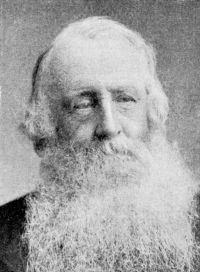 Edward A. Freeman,
The Chief Periods of European History
Edward A. Freeman,
The Chief Periods of European History
“ What little life there still was in the Greek world abode in the single cities, and there was doubtless more life among the Greek cities of Asia than in those of old Greece. Of Lykia in Strabo’s day we have only Strabo’s general description; we have no detailed illustrations of the working of the political system; least of all have we any speeches, any letters, any political treatises, either from Lykian orators or philosophers or from Roman magistrates who had dealings with the Lykian League or its cities. ”
Pausanias, The Description of Greece — Book VIII (1918)
“ When the water has been stirred up there rises a vapor, like mist; after a time the mist becomes cloud, gathers to itself other clouds, and makes rain fall on the land of the Arcadians. 8.38.5 There is on Mount Lykaion a sanctuary of Pan, and a grove of trees around it, with a race-course in front of which is a running-track. Of old they used to hold here the Lycaean games. Here there are also bases of statues, with now no statues on them. On one of the bases an elegiac inscription declares that the statue was a portrait of Astyanax, and that Astyanax was of the race of Arcas. ”
Petronius Arbiter, The Satyricon of Petronius Arbiter (1922)
“ At last, as the savage fury of the sea grew more malignant, the trembling Lycas stretched out his hands to me imploringly. “Save us from destruction, Encolpius,” he shouted; ‘‘restore that sacred robe and holy rattle to the ship! Be merciful, for heaven’s sake, just as you used to be!” ”
Peder Mariager, Pictures of Hellas: Five Tales of Ancient Greece
“ You know that Simonides, in his last will, left me his fortune and his daughter. But, as I am too old to marry a young wife, I want to ask if you are willing to take the girl with a dowry of eighteen talents?”Lycon stopped, but did not utter a word in reply. If the rude statue of Poseidon in front of the temple of the god had suddenly descended from its pedestal and come towards him, he could not have been more speechless with bewilderment.“That this may be done,” Polycles continued smiling, “I will adopt you as a son and make you my heir. ”
Gilbert Norwood, Greek tragedy (1920)
“ Certain aged Thebans, who form the chorus, arrive, followed by Lycus who, after sneers at Heracles, orders his henchmen to burn his victims in their house. Megara begs of Lycus that they be given time to array themselves for death. He consents, and the sufferers retire. Lycus departs, and soon the sad procession returns. Suddenly Heracles himself enters. He tells that he has brought back Cerberus and released Theseus, King of Athens, from the lower world; he promises to destroy Lycus and goes within. A splendid ode laments [229] the weakness of old age but glorifies the Muses. ”
Petronius Arbiter, The Satyricon — Volume 04 : Escape by Sea
“ But Lycas did not laugh; "If that governor had been a just man," said he, shaking his head angrily, "he would have ordered the husband's body taken down and carried back into the vault, and crucified the woman." No doubt the memory of Hedyle haunted his mind, and the looting of his ship in that wanton excursion. But the terms of the treaty permitted the harboring of no old grudges and the joy which filled our hearts left no room for anger. Tryphaena was lying in Giton's lap by this time, covering his bosom with kisses one minute and rearranging the curls upon his shaven head the next. ”
active approximately 150-175 Pausanias, Pausanias' description of Greece… (1886)
“ And in every age many curious things have happened, and some of them have been made to appear incredible to many, though they really happened, by those who have grafted falsehood on to truth. For they say that after Lycaon a person became a wolf from a man at the Festival of Lycæan Zeus, but not for all his life: for whenever he was a wolf if he abstained from meat ten months he became a man again, but if he tasted meat he remained a beast. ”
Peder Mariager, Pictures of Hellas: Five Tales of Ancient Greece
“ Lycon drew a long breath, and passed his huge hand over his face several times.“I thank you, Polycles,” he said at last, “I thank you from my heart! But how is this to be? I am a freedman, it is true; but you forget....”297 “I forget nothing,” answered Polycles. “But one thing you must know—the citizens must hear the whole story ... your condition of slave, your sin, and the punishment whose mark you bear. In a little place like Methone nothing can be hidden, so it is better to confess everything yourself rather than have it discovered by others. ”
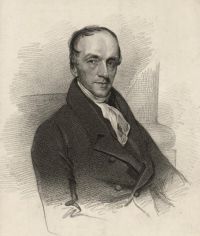 Richard Watson,
A Biblical and Theological Dictionary
Richard Watson,
A Biblical and Theological Dictionary
“ LYCIA, a country of Asia Minor, having Phrygia on the north, Pamphylia on the east, the Mediterranean on the south, and Caria on the west. The greatest part of the country, however, is a peninsula projecting into the Mediterranean. Lycia derived its name from Lycus, the son of Pandion, who settled here. It was conquered by Crœsus, king of Lydia, and passed with his kingdom into the hands of the Persians. It afterward, in common with the neighbouring countries of Asia Minor, formed part of the Macedonian empire, under Alexander; then of that of the Seleucidæ, his successors in those countries ”
