Summary

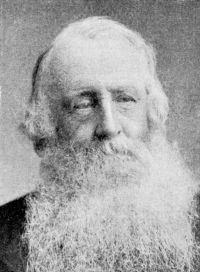
Portrait of Edward A. Freeman Edward A. Freeman The Chief Periods of European History

It was assuredly not Roman in the sense in which the Empire even of Theodosius was Roman. But here lies the greatest proof of the influence of Rome, of her magic power over the minds of men, that a power which had practically ceased to be Roman, should still be Roman in men’s eyes, and, as Roman, should command a reverence, a devotion, a bowing down as it were of the whole soul, which could be called forth by no other name. A name may have lost its first meaning; but, as long as men will fight and die for the name, the name is a fact indeed.
Source: Gutenberg

Portrait of Edward A. Freeman Edward A. Freeman The Chief Periods of European History

As Eastern Europe, Greek and Slavonic Europe, had never admitted the spiritual dominion of the Western Rome, so now Teutonic Europe cast that dominion aside. Nations which had, in the teeth of Emperors, asserted their independence in the affairs of the world, now asserted their independence no less in the range of man’s spiritual being. The Church of Rome remained, like the Empire of Rome, a power mighty and venerable, but a power confined, if not within the bounds of a single nation, at least within the bounds of a group of nations closely connected in history and speech.
Source: Gutenberg

Portrait of Edward A. Freeman Edward A. Freeman The Chief Periods of European History

When Rome speaks, all obey; kings fall down at the threshold of the Senate-house, as entering an assembly of gods; they keep themselves humbly within the line that the Roman rod traces round them, even on soil that they have made their own. Rome in truth rules from the Hadriatic to the Euphrates no less than from the Ocean to the Hadriatic; but save in the old Roman land which is her own, save in the few provinces which she has taken over as part of the spoil of Carthage, her power is still everywhere a power of influence and nowhere of direct dominion.
Source: Gutenberg

Get perspective with Kwize: daily news enlightened by great literature