Summary

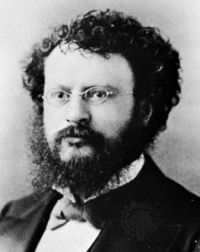
Portrait of John Fiske John Fiske Myths and Myth-Makers

Sometimes it is the sun, sometimes the earth, that is supposed to slumber. Among the American Indians the sun-god Michabo is said to sleep through the winter months; and at the time of the falling leaves, by way of composing himself for his nap, he fills his great pipe and divinely smokes; the blue clouds, gently floating over the landscape, fill the air with the haze of Indian summer. In the Greek myth the shepherd Endymion preserves his freshness in a perennial slumber. The German Siegfried, pierced by the thorn of winter, is sleeping until he shall be again called forth to fight.
Source: Gutenberg

Portrait of John Fiske John Fiske Myths and Myth-Makers

Thus we reach at last the completed conception of the divining-rod, or as it is called in this sense the wish-rod, with its kindred talismans, from Aladdin's lamp and the purse of Bedreddin Hassan, to the Sangreal, the philosopher's stone, and the goblets of Oberon and Tristram. These symbols of the reproductive energies of nature, which give to the possessor every good and perfect gift, illustrate the uncurbed belief in the power of wish which the ancient man shared with modern children. In the Norse story of Frodi's quern, the myth assumes a whimsical shape.
Source: Gutenberg

Portrait of John Fiske John Fiske Myths and Myth-Makers

It is not that the early Aryans were myth-makers because their language abounded in metaphor; it is that the Aryan mother-tongue abounded in metaphor because the men and women who spoke it were myth-makers. And they were myth-makers because they had nothing but the phenomena of human will and effort with which to compare objective phenomena. Therefore it was that they spoke of the sun as an unwearied voyager or a matchless archer, and classified inanimate no less than animate objects as masculine and feminine.
Source: Gutenberg

Get perspective with Kwize: daily news enlightened by great literature